Wednesday, October 26, 2011

#312 Pork Pie

Provocative of indigestion as that pie may seem to you, it was put together by a lovely cousin at Melton Mowbray, whose fair hands are equally skilful in rendering a sonata of Beethoven, or in compounding the gastronomic mysteries of the kitchen.”
Excerpt from Dialogues of the Living – Table Talk by J Hollingshead,
appearing in The Train magazine, 1857

The pork pie is the ultimate raised pie in England and the best come from Melton Mowbray in Leicestershire, a very old English town, founded around the 8th Century. The Melton Mowbray hand-raised pork pie attained Protected Geographical Indication status in 2008 – this means that only pies made within Melton Mowbray can proudly bare the town’s name. If you buy a pork pie that doesn’t bear the name, then it is not the real-deal. Unfortunately, Cornwall missed the boat in getting their pasties recognized by the EU, so a Cornish pasty can proudly bear the Cornish name, when it was actually baked in Milton Keynes or whatever.

The Olde Pork Pie Shoppe -
the best place to buy a proper Melton Mowbray pork pie

So what makes a Melton Mowbray pork pie special, other than the location it was made in? Well, first they should be hand-raised, second the pork inside should be uncured and the bacon unsmoked. There is also a secret ingredient: anchovy essence. Anchovy essence is not widely available these days, but it is possible to find it. In America, you’ll have to order some from Amazon. You could cheat of course by using some nam pla – Thai fish sauce. There is no difference between them at all. Don’t be put off by this, the sauce gives the meat a delicious seasoning. In fact it is quite common to use anchovies in this way with lamb, and oysters are great in a steak and kidney pudding. We have stopped combining our fish and meat these days, yet have no issue when we eat them together when we order dishes from a Far Eastern restaurant. Strange.

The main difficulty for anyone who may want to attempt this recipe in the USA is not finding the anchovy essence – oh no – it is the unsmoked bacon that is the tricky customer. I hunted high and low for it when I was in Houston, but I never found wet-cured, unsmoked back bacon. I assumed that if I wanted to make a pie whilst living in the States, I would simply have to wet cure my own. However, at a Farmer’s Market in Chicago, I happened upon a stall selling not only unsmoked back bacon, but also traditional British sausages. The stall is run by an English chap, who coincidentally comes from Leeds too, called Nicholas Spencer. Check out his website here. He said he’ll be doing mail order soon, so I am looking forward to that.

Anyways, if you want to have a go at making your own traditional pork pie you need to get planning! It is quite an effort, though very good fun. I’ve already posted about making raised pies. In brief (with links) you need to get three things ready: hot water pastry for the raised crust, a jellied stock, and the filling itself. I’ll provide you with the recipe for the pork pie filling here…

First of all prepare the pork. You will need two pounds altogether  – boned weight. You need a cut of pork that is around one-quarter fat, so go for shoulder, leg or ribs. Make sure you get the bones form the butcher so you can use them in your jellied stock. Also at the butchers, get yourself an eight ounce pack of unsmoked back bacon. When you get home, chop the meat. Keep the best bits chunky, in around a centimetre dice, the other bits, chop finely. This is a bit of an effort, but it is this chopping – rather than mincing – that gives you the proper texture. Also, chop up two rashers of the bacon. Into a bowl, put in your chopped meat and mix in the following: a teaspoon of chopped sage, a teaspoon of anchovy essence and half a teaspoon each of ground cinnamon, nutmeg and allspice. Lastly, season well with salt and pepper. If you want to check the seasoning is correct, take a small amount of the mixture and fry it. Taste and correct accordingly.
When it comes to putting the pie together, use the remaining bacon to line the raised pie crust, add the mixture, packing it in well.

Cover with a pastry lid and finish it off, following the method in the raised pies post.

What should one eat with a pork pie? These pies are great for buffets and picnics, so eat whatever you are serving at your buffet or picnic… Personally, I like some nice brown HP sauce or maybe tomato sauce. Some like to warm the pies and have them with mushy peas. I have been eating mine with the preserved spiced oranges I recently cracked open – a really good combination that.

#312 Pork Pie. It seems you can never be let down by these raised pies. This one was great: the mild herbs and spices gave  the meat a subtly complex flavour. The idea of a cold meat pie feaked a few people out at work, and  suppose the jelly is something you either love or hate. I have been eating the pie slowly over the last few days, and it seems to get better as it ages. Very good, not quite as delicious as the Veal, Ham and Egg Pie, but still pretty tasty. 8/10.

Thursday, October 20, 2011

#311 Courgette and Parsnip Boats

If you're afraid of butter, use cream.
                                            Julia Child
This is a recipe that I, admittedly, have been avoiding. A courgette and parsnip boat? What the heck is the point of that? Of course, I have nothing against neither courgettes nor parsnips, but this seemed a little over the top: scooping out the centres of courgettes and then piping hot parsnip purée inside. Hm. This is a recipe that Grigson was trying to introduce us to the 1970s, and it seems very 1970s – very Fanny Craddock. The recipe comes not from her, but from a certain Julia Child. You may have heard of her.

I suppose I have to bring up the subject of a certain blog-cum-bestselling-book-cum-Hollywood-movie called Julie & Julia, created, of course, by Julie Powell. I cannot believe that she stole my idea! What’s more, I cannot believe that she travelled forward in time only to see my blog, steal my format and then travel back in time to start up her own blog, only to rake in shedloads of cash. Despicable behaviour.

That might be a tiny fib. But I remember being well annoyed when I found out that there was already blogs out there doing the same thing as me. And here I was thinking I had an original idea.

Anyways, back to the matter in hand… Grigson does ‘not apologise for including [the recipe]’, but this non-apology is for the fact she has included a recipe from America. She needn’t apologise for that. However, as a straight-forward lady, I am rather surprised that she included it in here. I think perhaps she was actually trying to introduce us to eating courgettes; I remember them being a rather exotic ingredient in our house growing up the in the 1980s, even though they are just baby marrows. She also goes on to complain of so-called ‘fancy touches’, saying that they are usually an excuse for serving bad food, giving such examples as radish roses on salads and cheap buttercream stars upon margarine cakes. Is this recipe any different though? We’ll see…

In case any Northern Americans are a bit confused about this strange thing called the courgette, I am talking about the zucchini of course.

The recipe serves six people, but you can easily increase or decrease the ratios if there is not six to feed.

Begin by selecting six courgettes around six inches long. Top and tail them and cut each one lengthways before scooping out the seeds. Plunge the courgettes into boiling salted water, blanching them for no more than five minutes. It is important not to over-cook them at this point; they’ll just end up all mushy and flaccid, and you don’t want that. Drain the courgettes and place them on a baking tray, brushing them liberally with melted butter. All this can be done ahead of time.

Next, get to work on the parsnips. Peel and chop two pounds of parsnips, boiling them in salted water until they are tender. Place them in a blender along with an ounce and a half of butter and five tablespoons of double cream. Season and then blitz them well, making sure there are no lumps (see below).

Reheat the courgettes in the oven at 220C (400⁰C) for about five minutes. In the meantime, put the puréed parsnips into a piping bag equipped with an appropriate end. I used a star. Take the courgettes out of the oven and pipe the parsnips in an attractive fashion into the courgette boats.

I have to admit it was good fun doing this bit, though that bag was pretty hot! The main problem was that there was a few lumps of parsnip that kept getting stuck in my piping star. Cue parsnip explosions as the pressure built up in the forefront of my bag. I’m surprised no one lost an eye.
The boats await the rest of the dinner...

#311 Courgette and Parsnip Boats. Well I have to say I did like them. The parsnip was rich and creamy, which was set-off well by the blander courgette. I do wonder if just having a ragout of courgettes and some puréed parsnips made separately wouldn’t be simpler, or indeed better. What I really find odd about this receipt is that Jane Grigson singled this one out as a highlight. I’m sure Julia Childs had some better recipes than this one. 6/10.

Thursday, October 13, 2011

#294 Preserved Spiced Oranges (Part II)

Do you remember that time I lived in Texas? It seems like an age away, but it was only three months ago that I packed up my stuff and headed for Missouri. I remember gingerly packing my tins and bottles of various foods, hoping they wouldn’t get broken in the move. Amongst them were the jars of the Preserved Spiced Oranges I made in Maytime. I decided it was about time to try them. I admit I was putting them off rather – the last orange-based recipe was Soyer’s Orange Salad, which basically slices of raw orange sat in brandy, and it shall not be made again.

Anyways, these orange slices are to be served with hot or cold pork, duck, ham – I expect goose too. I decided roast a duck to mark the occasion of opening up a jar of these oranges. Oddly, there is no recipe for roast duck in English Food. Therefore, as it is an omission, I shall be adding my own recipe to the other blog (and here is the link). Though it is worth mentioning that I used a bit of the syrup from the jar to flavour my gravy. Grigson also mentions that the leftover syrup makes a great sauce for duck.


#294 Preserved Orange Slices. Well I do wish I hadn’t left trying these for so long, for they were delicious! The oranges had become very tender, without any bitterness at all. They were wonderfully warmingly sweet with the now well-infused cinnamon, cloves and mace. All that sugar and spice was cut beautifully by the white wine vinegar. Good work, Griggers! 8.5/10.

Sunday, October 9, 2011

#310 Smoked Mackerel

There are ingredients for recipes in the book that I really thought I wouldn’t be able to find, and one of those is smoked mackerel. Smoked mackerel was a new addition to English cuisine at the time of writing English Food and these days it is quite easy to find in supermarkets. So why is there a problem? Well, Griggers says to keep away from the hot-smoked (i.e. cooked) mackerel as she says it often ends up as mush; no, only cold-smoked mackerel will do. When I lived in Britain, I had no luck finding anywhere that sells it. However, here in Saint Louis, as I was having a walk around Global Foods – a large international food market – what did I happen upon just sat there in the refrigerator as bold as brass? Yes, a large cold-smoked mackerel. It is amazing what you find when you’re not looking. It turns out that cold-smoked mackerel is very popular in Eastern Europe. It obviously didn’t catch on that well in England, though Griggers gets full marks for trying to push it.

Like many recipes in the Cured Fish section of the Fish chapter, this isn’t really a recipe, as there is no cooking involved, it’s really advice on how best to serve it.


First you need to fillet the fish, removing any bones, and arrange pieces of the fillet on a plate. I was pretty impressed with my presentation here; I’m not very good at that sort of thing normally. She suggests serving the mackerel with lemon quarters and brown bread and butter. Because there was no cooking involved, I felt it was a bit of a cop-out recipe, so I baked some bread myself. Jane also suggests making a gooseberry sauce flavoured with horseradish. There is zero chance of finding gooseberries here in Missouri so I couldn’t do that part, but it was just a suggestion, so I reckon I can let myself off...


#310 Smoked Mackerel. A delicious fish it was, no wonder Grigson wanted to get us all eating it. It was very much like eating smoked sashimi, which is certainly not a bad thing. It was much more firm and flavoursome than smoked salmon, which can often be weirdly gelatinous in its texture. The smoky flavour was excellent and bona fide; it smelled as though it had just been snatched from the smokehouse. I think cold-smoked mackerel might catch on these days; sushi is popular and people are much less likely to turn their noses up at raw (though perfectly-cured) fish. Hopefully it might get a second chance. 7/10.

Wednesday, October 5, 2011

#309 Sticky Toffee Pudding

Sticky toffee pudding has got to be one of the best – if not the best – of all English desserts. It is quite a recent invention – a chap called Francis Coulson cooked it up, as it were, in 1948. For a pud that is just over 60 years old, it has become such a cornerstone of English cooking I cannot imagine life without it. It was created as an antidote to the lean post-war rationing, and was packed full of butter, brown sugar, cream and dates. Many people thought this was too much of an extravagance and were quite shocked by its richness. Curiously, Francis Coulson was the first hotelier in England to include a hairdryer in every room. Don’t say I never give you interesting facts.

Because the sticky toffee pudding is such a treat, I have been saving the recipe for a special occasion, and as Hugh was over in St Louis on a visit, I thought it very appropriate. I also invited some mates from work for some drinks too. I had never made one before, and crossed my fingers that it would be as delicious as the ones I have eaten in restaurants or purchased from the excellent Cartmel Village Shop in the Lake District. Good though the Village Shop is, have a go at making one yourself. You will not be disappointed.

Begin by greasing a 7 inch square cake tin with butter. Chop 6 ounces of stoned dates, place in a pan and pour half a pint of boiling water over them. Bring to a boil and then take off the heat and stir in a level teaspoon of bicarbonate of soda and leave it be whilst you get on with the cake mixture.

Cream together 2 ounces of softened butter with 6 ounces of caster sugar. Next, beat two egg and add them to the butter and sugar in stages. Fold in 6 ounces of self-raising flour, then the dates and their juices and half a teaspoon of vanilla extract (not essence, people!). Pour the mixture into the cake tin and bake for 30 minutes at 180°C (350°F).

Whilst it bakes, make the sticky toffee sauce by melting together in a saucepan: 7 ounces of soft dark brown sugar, 6 tablespoons of double cream, 4 ½ ounces of butter and half a teaspoon of vanilla extract. Simmer for around three minutes until a luscious sauce develops.

When the pudding is cooked, pour and spread a little of the sauce over it and put in the oven for a further 5 minutes. Cut the pudding into squares and serve it hot with more of the toffee sauce. Personally, I like it with either double cream or vanilla ice cream.


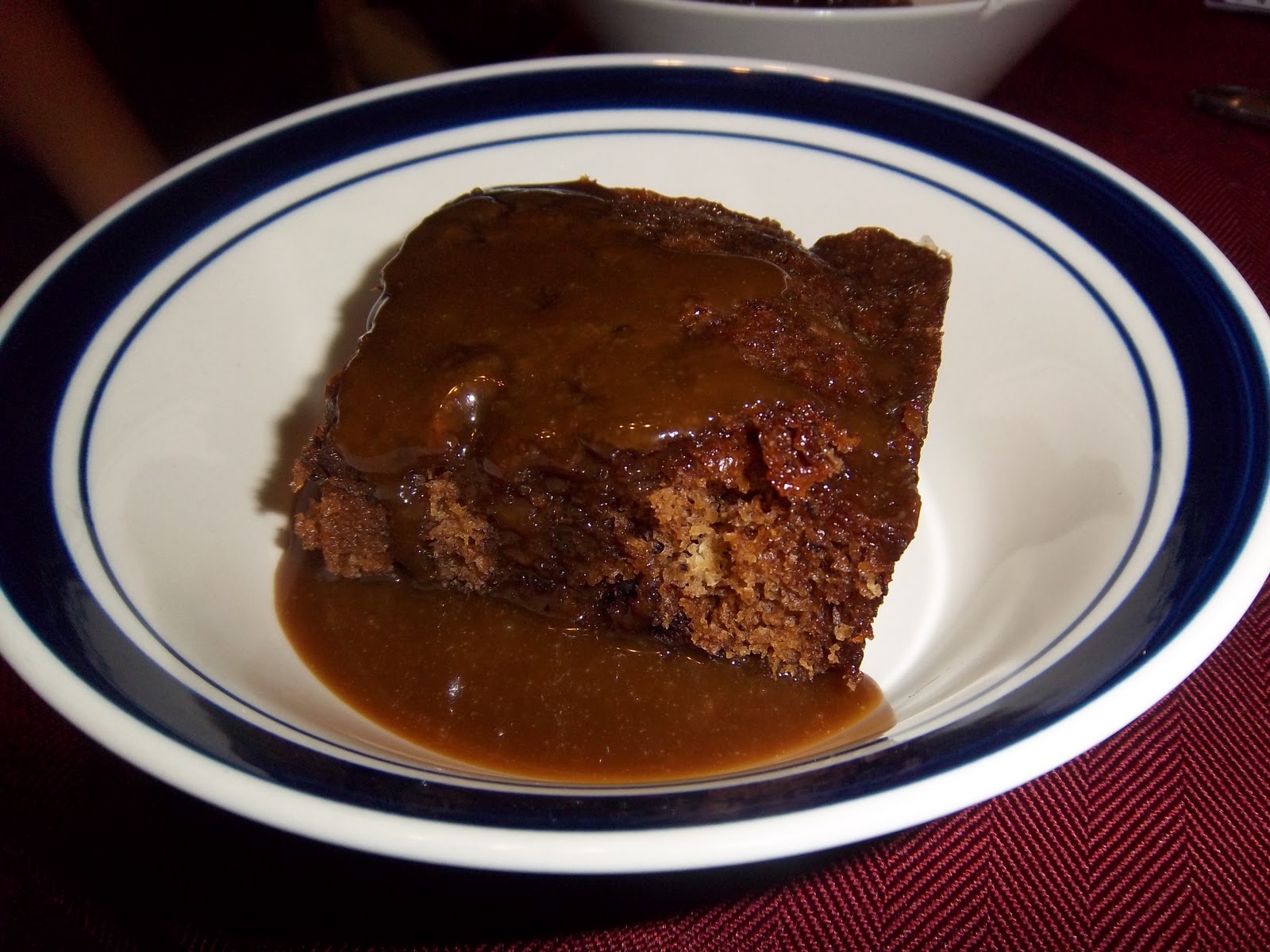
#309 Sticky Toffee Pudding. Without a doubt, the most delicious pudding from the book so far. The cake had become dark and sticky; the brown sugar preventing it from being too sickly. So good that I insist you go out and make this for yourself – no bought pudding could be as good as this. Fantastic, fantastic, fantastic 10/10.

Sunday, September 11, 2011

Neil Cooks Grigson is 4!

Hello there.
I just realised today that it is Neil Cooks Grigson's 4th birthday! I am so terrible at remembering these things - if I had been a bit more observant I would have done a nice spread. Oh well never mind. At least I get the chance to say a big thanks to everyone who reads and comments on the posts, I get such nice feedback from people and that always spurs me on.

I am two-thirds of the way through the project now, so I suppose there's still another couple of years of blogging this book at the very least!

The blog is going to be quiet over the next few weeks, but I have great plans coming up for October.... watch this space...

Wednesday, August 31, 2011

#308 Walnut Biscuits

The blog has been a little quiet of late because of a combination of business and broken car. This means that I’ve not been able to explore St Louis’s butcher’s shops, markets et cetera anywhere near as much as I’d hoped this month. However, there are still a few simp recipes to do in the book and this is one of them. I had hoped to not do any recipes from the Teatime chapter of the book because I have done so many and there are so many under-represented chapters. However, beggars cannot be choosers, so I made these walnut biscuits that are very similar to the sugar thins I made ages ago. Don’t feel guity about eating a load of these either; walnuts have more antioxidants than any other nut. You might end up a fat little piggy, but you’ll have none of those pesky free radicals aging the skin of your three chins.

Start off by creaming together seven ounces of softened butter with five ounces of caster sugar. Next, beat in a large egg and then eight ounces of self-raising flour and three ounces of chopped walnuts.


Spoon a third of the mixture onto a rolled out piece of cling film and roll it up tightly to form a sausage shape that is about 2 inches in diameter.


Repeat with the rest of the mixture. Put the sausages of dough in the fridge to harden up over-night. You can freeze them like this too.


Next day, peel away the cling film and slice up the dough thinly and place on baking sheets. Bake for no more than ten minutes 190°C (375°F).


Griggers reckon they go well with coffee, and I am sure they do, but as I am not allowed to drink coffee anymore (Doc’s orders), it’ll have to be a tea.

#308 Walnut Biscuits. A nice, crisp biscuit that is sweet and crumbly; it certainly would go with unsweetened coffee or tea. The only problem with them is that there weren’t enough walnuts. I would go to four or maybe five ounces of walnuts. 7/10

Saturday, August 20, 2011

#307 Mashed Potato with Dulse

Nobody really eats dulse, or any other seaweed, in England these days, though they used to. It is a pity because I do like the stuff. It seems to be popular still in Ireland though; my friend Evelyn often brings back a bag of it whenever she visits home and I like to steal a few pieces.

Dulse had been eaten for over one thousand years in North-Western Europe, the ancient Celtic Warriors of old ate dulse as they were marching and during the seventeenth century, and British sailors used it to prevent scurvy (although it was actually originally used as an alternative to chewing tobacco).
Its popularity in Ireland as well as Scotland led to dulse becoming liked in the USA too when they immigrated over the pond, although none of my American friends seem to have heard of it.
The Dulse Gatherers by Willaim Marshall Brown, 1863-1936

The dulse industry has obviously died a bit of a death in England and the rest of the UK and Ireland compared to days of yore. Charles Dickens, writing in 1858, reminisces about childhood holidays in Aberdeen where there were often over a dozen ‘dulse-wives’ selling dulse:

[O]f all the figures on the Castlegate, none where more picturesque than the dulse-wives. They sat in a row on little wooden stools, with their wicker creels placed before them on the granite paving stones. Dressed in clean white mutches, or caps, with silk-hankerchiefs spread over their breasts, and blue stuff wrappers and petticoats, the ruddy and sonsie dulse-women looked the types of health and strength... Many a time, where my whole weekly income was a halfpenny, a Friday’s bawbee, I have expended it on dulse, in preference to apples, pears, blackberries, cranberries, strawberries, wild peas and sugar-sticks.
He recalls a conversation:
A young one would say: “Come to me, bonnie laddie, and I’ll gie ye mair for yer bawbee than any o’ them.”
An old one would say: “Come to me, bonnie laddie, and I’ll tell what like yer wife will be.”
“Yer dinner ken yerself.”
“Hoot aye – I ken brawly: she’ll hae a head and feet, an mou’, and eyen, and may be a nose, and will be as auld as me, if she lives as lang.”
“Aye: but ye gie me very little dulse for my bawbee.”
“Aye,” replies the honest woman, adding another handful, “but sic a wife is weel worth mair siller.”
The dulse-wives exploded into laughter, when the woman suggested some one like herself, as the ideal wife which youth is doomed always to pursue and never to attain.
Oh! those dulse-wives.

Anyway, enough prattle, time for the recipe:
It could be easier, really. First, scrub and then boil some potatoes in their skins without adding any salt. Remove the skins and mash them. Next, crumble the dried dulse and fry it in olive oil – you’ll need a quarter of an ounce of dulse for every pound of potatoes used. This takes just a few seconds. Add the oil and dulse to the spuds and mix, mashing in some extra olive oil if need be.
Serve with lamb (as I did), beef, chicken or fish.

#307 Mashed Potato with Dulse. Well this was good mash, but there wasn’t much flavour of dulse in there. It did give the potatoes an attractive green colour though. I thought it strange that the recipe asked for olive oil rather than butter – olive oil was not used that much when English Food was first written in 1974. It would have been most likely found in chemist’s shops, where it was used to remove ear wax. 5/10

Sunday, August 14, 2011

#306 Mint Sauce

Ah, mint sauce. I love mint sauce, but have never actually made it myself. Mint sauce is, of course, the sauce to go with roast lamb, especially during the summer months. Though, I remember as a child when I used to go swimming with my Dad on a Sunday to Morley Swimming Baths, I always had a chip butty smothered in mint sauce straight afterwards.

The piquant sauce goes so well with fatty or rich foods. St Hildegarde, a German spiritualist nun of the early Middle Ages, said this of mint: “Like salt, when used sparingly, it tempers foods…[M]int, added to meat, fish or any other food, gives it a better taste and is a good condiment; it warms the stomach and ensures good digestion.”

I reckon that this is true, and by adding somesweetness and mild vinegar, you can get away with using it more than sparingly.
St Hildegard (1098-1179) depicted having a nice sit down

Griggers emphasizes that this sauce must be made with freshly boiled water and wine vinegar, not malt as it is far too harsh. We always used malt vinegar in our house when ‘diluting’ the thick sauce that came out of a jar. Let’s see how the proper stuff tastes like…
Chop up enough mint leaves to fill a measuring jug to the quarter-litre mark. Add three tablespoons of boiling water, stir and let the mint infuse into the water. When it is just warm, stir in three level teaspoons of sugar and four tablespoons of wine vinegar (any kind, though I went with red, as that’s all there was!). Stir to dissolve the sugar and add more sugar of vinegar if you like. I found the amounts given to be right on the button, myself.

#306 Mint Sauce. Excellent, excellent excellent! Sweet, sour and wonderfully aromatic. I am never, ever going to buy mint sauce again. Go and make some. 10/10

Wednesday, August 10, 2011

#305 Guard of Honour

For the meaty part of the dinner party I mentioned a couple of posts ago, I thought I would attempt a Guard of Honour. For those of you not in the know, a Guard of Honour is an attractive way of presenting roast rack of lamb by taking two racks and sitting them upon a roasting tray so the rib bones ‘bristle like a military row of crossed stakes’. The Guard can then be stuffed if you like. Jane likes, as this recipe includes the herb stuffing that I have made a few times now.

I did a little research on this dish, assuming it would be a very old one, but was surprised to find that I could only find relatively contemporary recipes, with none cropping up even in the nineteenth century. Odd.

Griggers recommends buying a whole best end of neck of lamb and to ask the butcher to split it in two down the backbone and to get it chined between each rib so that you can carve the joint easily later. To chine is to cut the backbone. If this wasn’t done, you’d have some thick bits of bone to wrestle with. Ask him to leave on the long bones of the ribs. This part is a rather difficult thing to achieve in America for a couple of reasons. First, the joint called a best end of neck means nothing and second, lamb is generally imported from New Zealand and pre-butchered, at least in part. It’s quite easy though to get hold of a couple of matching racks and to simply not have the extra-long bones.

To make a Guard of Honour, take your two racks of lamb and scrape the skin and fat from the very thin part of the chops to expose the bones, then score the fat on the chops and rub in salt, pepper and rosemary or thyme into it (I went with thyme). Stand the joints up and allow the ribs to cross over each other. Fix them in place with skewers. The cavity within can then be filled with herb stuffing. I found the easiest way to do this was to turn the joint upside down, opening it up, so that the most stuffing possible could be added. (Thanks for taking the photos, Joan!)


Turn it the right way up and press the sides together gently, scraping away any escaped bit of stuffing. Check the security of your skewers and place on a roasting tin.


Roast in a preheated oven for 1 ½ hours at 190°C (375°F). Note that this means that the meat will be well-done.


The meat can be carved, after a period of resting, nice and neatly, giving two chops per person.


Serve your roast lamb with any of the trimmings Jane suggests here. She does mention that the stuffed tomatoes recipe goes very well with Guard of Honour, but I wanted to do other things...


#305 Guard of Honour. I really liked this. I did make it because I was in the mood for lamb. Usually I like my lamb pink, but the delicious herb stuffing helped to keep the well-done meat moist and flavourful. I must admit it wasn’t quite as impressive as it should have been because I couldn’t give the precise instructions to the butcher in the preparation of the joint. I think I shall do some of the more tricky lamb recipes back in Blighty. This is only a little complaint of course and the recipe was very good indeed. 8.5/10

Tuesday, August 2, 2011

Griggers advises us on what to eat with roast lamb....

The next recipe from English Food will be roast lamb. Not as popular as it was as a roast meat these days, but easy to come by. Jane Grigson in her wisdom gives us a list: 'Things to go with Roast Lamb'. I thought I'd give the list in full. Hopefully as I cook through the Lamb & Mutton section of the Meat, Poultry & Game chapter, I'll try them all. Some I'll have to as they are also offical recipes, others I have inadvertantly tried as parts of other dishes and such. Anyways, here's the list:

Mint sauce (summer)
Redcurrant or medlar jelly (winter)
Laverbread, heated with orange and lemon juice
Young peas and young potatoes cooked with mint
Asparagus
French beans
Spinach
Cauliflower
Purple sprouting broccoli
Chestnuts and Brussels sprouts
Chestnut puree
Onion sauce (2 recipes for that thus far)
Roast potatoes


Mutton and lamb in oil-on-canvas form

Saturday, July 30, 2011

A Dinner Party

Tomorrow I am cooking a meal for all at the lab. Because there are so many of us (nine!) it is being hosted at my friends and bosses Dave and Joan’s house. Here’s the menu, it is very English of course:
with
vegetables

…and for dessert
I do love cooking for a dinner party. You can I have been paid! If you don’t know what Guard of Honour, dulse or Eton Mess are, you will do soon when I post the recipes on this or the other blog.

Friday, July 29, 2011

Introducing... Blog #2

For some crazy reason I have started a second food blog, and I thought you might like to know! It is called British Food: A History. Surely this blog covers alot of that suject, you say. And you would be right. It is somewhat restricted by the recipes in the book English Food. Granted there are a total of 449 recipes to cook for the blog, so it is not exactly non-comprehensive, but there are so many recipes not in the book at all. There is no jam roly-poly or beef Wellington! Major oversights by Griggers there. Also there are recipes she unfortunately never got to see flourish. Chicken tikka masala, anyone? I have been compiling a list on a spreadsheet for a while now. I originally intended to do an English Food Part II or something, but found there are lots to write about other than the recipes and the stories and factoids behind them. I also realized that it’s not just England, but Britain that should be represented as well as the countries that have influenced it the most like Ireland, France and countries of the ex-empire such as India and China.


So it won’t just be recipes but any interesting nuggets I find plus the best of the recipes from English Food and the blog. I always said that I would never go back and alter any posts, and some of the early ones are pretty bad, so I will tart some of them up and add them. It’s amazing how my writing has developed since those early days of the blog. But don’t worry, Neil Cooks Grigson shall not suffer! I just need somewhere to put all the stuff that doesn’t quite fit.

It is very early days for the blog, but do have a look at it – I would be very grateful. Perhaps become a follower. In fact, I know that there are a few food bloggers (and would-be bloggers?) that have a look on here from time to time that might like to post on it, so if interested let me know as I would love it if several people contributed.

Laters!

Wednesday, July 27, 2011

I have made babies!

My little winter savory seeds have hatched. I am a Dad!


The lamb's head in brain sauce may just be weeks away! (Assuming I can find a lamb's head...)

However, in the chervil department, I am rather more barren, but there's still time yet for those little seeeds to hatch...

Monday, July 25, 2011

#304 Water-Souchy

"And lo, Jesus said,
'Hurry up lads, I am champing at the bit here.'"

There have been plenty of recipes in English Food that have seemed so unappealing on paper, but have turned out good. This one certainly didn’t sound good – a fish stew made from freshwater fish, a few basic vegetables and water. I think it’s the name that did it for me I think – I imagined a thin, watery, muddy-tasting soup. However, every recipe must be cooked and freshwater fish is a bit of a speciality in America, seeing as most of it is far away from the oceans. It would have been a tricky one to do in England without spending a fortune getting a variety of freshwater fish from the fishmonger, or going out and fishing for the buggers yourself. Here, you can just go to the supermarket and choose from a range.

So, water-souchy is a very rustic fish stew made from whatever the angler in the family brought home after a session in his or her waders in an idyllic stream in rural England. Obviously, I am not in England anymore, so I wanted the fish to reflect what I might have caught here on the Mississippi River if I could be arsed to fish there. I had a look in Seafood City, an Asian supermarket on Olive Boulevard in St Louis and bought myself some good fresh carp and catfish. Five pounds of fish are required, and cost me the princely sum of $7.50. Pretty good, I reckon, seeing as I’m rather poor at the moment.

Water-souchy became popular in the seventeenth century and remains so, at least in fishing circles. The word comes from the Dutch waterzootje, and has been described as the bouillabaisse of the Northern Latitudes. According to certain George Augustus Sala, writing in 1895 in Thorough Good Cook, 'You rarely get it good, save at Greenwich. Why I cannot say'. Well, it may be to do with the freshness of the fish, says Griggers, the quality of your water-souchy will be diminished if your fish is not perfectly fresh.

To make this simple stew, start off with five pounds of very fresh scaled and cleaned freshwater fish and cut them up into big chunks – no need to bone or fillet, for it is the bones that produce the stock and flavour the dish. Jane suggests perch or a mixture of fish such as perch, carp, eel &c. In a large saucepan, spread three ounces of butter over the base and cover that with the vegetables and herbs: two cleaned and chopped leeks, two chopped celery sticks, two tablespoons of chopped parsley and a bouquet garni. My bouquet garni was made up of a bay leaf, some parsley stalks, three fronds of dill and a crushed garlic clove all tied up in a bunch.


Season these well with salt and pepper and then place the chunks of fish on top. Season those too. Cover with water, bring to the boil and simmer with the lid on for about twenty minutes until the fish is cooked.


Serve in bowls, sprinkled with some croutons of bread fried in butter. I used stale sourdough bread for this, and they were very good, even if I do say so myself. ‘One eats water souchy with spoon and fork’, according to Mr Robert Pierpoint, writing in 1908. It’s the only way you can eat it really.


#304 Water-Souchy. Well as per usual the bad sounding recipe turns out to not be a dud at all. The stew was well-flavoured with the vegetables, herbs and the fish itself. It is really important to choose a pungent and tart herb like dill for something very simple like this I think as it livens things up no end. The fish was very moist, but the thing we all found a little off-putting was the bones. We are too used to eating neat steaks and filleted pieces of fish, I think; so the best way to improve this recipe, we decided, would be to fillet the fish and use the bones, and herbs to make a stock first, drain it, and then cook the vegetables and fish in the clear broth. Indeed, Eliza Acton suggests the same method in Modern cookery, in all its branches (1845). A good stew scoring 6/10 from me, but I think it could easily upped with some minor changes.

Saturday, July 23, 2011

The blog might have been quiet, but I have not…

Ey-up, Grigsoners! I’ve not posted for a while on the blog because I have simply run out of money this month. The move up has been pretty expensive and I only had two week’s pay to last me the whole month. Most of this has gone on petrol and boring moving things. However, I have been getting to explore the city and I’ve managed to find an excellent little farmers’ market very close to me. Tower Grove Farmers’ Market is small yet perfectly formed and has plenty of stalls to keep me busy.


I have found suppliers for Guinea fowl, wild rabbit, marrow bones and all-sorts of tricky to find poultry and meat-cuts.


There’s also a lovely English lady called Jane who has an English bakery stall, plus a great tea stall too. I am looking forward to getting to know these people. I also went to St Louis’s most popular farmers’ market at Soulard last week. This one was rather disappointing as it wasn’t really a farmers’ market, just a huge normal food market really. Not that there’s anything wrong with that; I’m sure I’ll frequent it for fruit and vegetables, and there was a few good proper farmer-run stalls there, but no meat or fish really.


Talking of fish there are two great places for that kind of thing here – Bob’s Seafood sells a good range of sea fish and will order fish in for you too, plus they’ll portion the stuff as you request. Should be good to get the usually tricky-to-find mackerel and herring. There is also a huge Asian supermarket called Seafood City which is quite an experience; there’s a host of live fresh and seawater fish and crustaceans including eel. There’s also live turtle, which I actually found a little disturbing. Many of the species are killed in-store which is a bit gruesome. The killings only seem to occur once a week. Go on a Saturday and there fresh fish a-plenty. Go on a Thursday and it is a sorry site


One of my best friends of the blog is, of course, the internet and have found that Amazon.com of all places has an excellent grocery department. I have managed to get preserved ginger – a favourite ingredient of mine and never seen by me anywhere in a grocery store in the USA thus far. I’ve also managed to get some seaweed, not a thing really associated with English food anymore, though still popular in Wales and Ireland.


Lastly, I have also been attemping to flex my green fingers. Some herbs and vegetables are simply unavailable – both sides of the pond. I have therefore got hold of some heirloom seeds and have planted some winter savory (required for the lamb’s head in brain sauce recipe!) and chervil.


I’ve also bought a mint and a marjoram plant. I don’t want to get too cocky, so I am sticking with these four for now and I shall see how I get on. I am a terrible gardener so I won’t get too excited about it yet; my mint plant is already riddled with some kind of powdery mildew, though some chervil seeds have germinated, so you take the rough with the smooth. The aim is to get a full herb garden growing. We shall about that one…

Friday, July 15, 2011

#303 Cornish Charter Pie


In Jane Grigson's book Good Things, she quotes from the diary of a Parson Woodforde, a Norfolk clergyman who obviously liked his food. He wrote in his dairy on the 13th of July that "[we] had for Dinner some Pyke and fried Soals, a nice Piece of boiled Beef, Ham and a Couple of Fowls, Peas and Beans, a green Goose rosted, Gooseberry Pies, Currant Tarts, the Charter, hung Beef scraped &c…". All recognisable as nice food typical of the British Isles at that time, except, that is, for The Charter. "Was it [a] sweet or [a] savoury? Was it in fact even food at all?" she asks. Then, apparently on another occasion at the Parson's brother's, an incident occurred where a very naughty dog snook into the cellar and snarfed down The Charter all to itself. It was, at least, food, but dogs will eat pretty much anything, so the type of food isn't possible to deduce.

My friend Katie has a dog that ate an entire chocolate cake once – fully iced as well. What happened to that cheeky dog's bowels is not fit for a description in a food blog.

Parson Woodforde 1740-1803

Anyways, the editor of the Parson's diary assumed it was some kind of custard. It wasn't until Griggers stumbled upon the book A few choice recipes by Sarah Lindsay (a Lady) from 1883, who gives a recipe for a Charter Pie, saying it is a Cornish recipe and the filling is of chicken in cream. It's a shame that Jane had no internet in her time; it would have made her life so much easier as I found this little fact on GoogleBooks pretty quick-smart.
Upon doing a quick recipe search on the internet, I found a few versions of the recipe, but they didn't really give any more background to the pie. I did notice that one website listed it as American cuisine, so it must've been taken over the Atlantic at some point and survived there for a good few generations.

Anyways, I thought this pie would go down for my dinner party-cum-buffet that I had last weekend. The Meat Pies & Puddings section of the book has been rather hit and miss, so I did worry that would be a bit crap. Jane does big it up, and it does appear also in Good Things, so for it to occur twice in her writing, it must be good…

The recipe asks for two three pound chickens that have been jointed, so you can imagine that it is a decent sized pie, so make sure that you make enough shortcrust pastry to cover a large, shallow pie dish. The recipe specifies a rich shortcrust pastry too, so make it with at least five ounces of salted butter (and therefore ten ounces of plain flour), an egg yolk and some ice-cold water to bind.

Whilst your pastry is resting in the fridge, chop a large onion and soften it in two ounces of butter. Remove the onions from the pan and spread them on the base of a wide, shallow pie dish or tray. Toss your chicken pieces in seasoned flour, turn up the heat in your pan, add a two more ounces of butter and fry the chicken pieces until they are a nice golden brown. Do not crowd the pan, so cook in two or three batches if you need to. Arrange the chicken pieces tightly together in a single layer on top of the onions.


Next, chop a leek or six spring onions alongside a nice large bunch of parsley. Place in a saucepan and cover with a quarter of a pint each of milk and single cream (that's coffee cream for any Americans). Bring to a boil and simmer for two or three minutes. Pour this mixture over the chicken and season very, very well with salt and pepper.


Roll out your pastry and cover the pie, using some beaten egg as a seal. Make a hole in the centre of the pie large enough to fit a kitchen funnel. Jane then asks us to make a pastry rose to fit on top of it that also has a hole (so the steam can still escape). Decorate with more pastry if you like. Brush the pastry with more beaten egg. Bake at 220-230°C (425-450°F) for the first twenty minutes and then lower the heat to 180°C (350°F) for the remainder of the cooking time – an hour should do it.

Just before the pie is ready, bring half a pint of double cream to the boil, so that when it is cooked, you can take the pie from out of the oven, remove the pastry rose and pour in, with the aid of your funnel, the hot cream. Then replace your rose.


The pastry is good hot or cold, says Jane. It went for just warm so that the sauce would thicken almost becoming jelly (a benefit of using chicken on the bone, rather than just the meat cut into pieces).


This is perhaps a good point to mention the proper English way of serving up a pie like this. Using a knife, cut away the piece of pastry you would like to serve and place it on the side of the pie. Next, spoon out the filling onto the plate and perch the pastry on top of it. Do not go digging straight in there with your spoon messing up the pastry and getting all mixed up with the filling. This is a deadly sin at the Buttery residence and you will be thrown out should you attempt it.


#303 Cornish Charter Pie. What a great pie! The ingredients made a thick creamy chicken soup that is delicious in itself and the chicken was wonderfully tender from being cooked in all that milk and cream. Much better than the last chicken pie from the book, which was insipid by comparison. This will be my staple recipe for chicken pie in the future (unless anyone has one that can beat it). 8.5/10.

Monday, July 11, 2011

#302 Caveach of Sole

I decided that I needed to get back into doing some proper cooking now that I have a new stove in my new apartment. I invited some people around from work and their various spouses and kids. It is pretty hot here in St Louis at the moment so I needed to choose a recipe that was nice and summery and not all hot and stodgy. It needed to be buffet-style as there would be eight of us in all and I can only fit four around my little table. It also needed to be one that is prepared in advance so I wouldn't be rushing around in the 35°C heat on the day. I don't ask for much do I? Oh, and it also couldn't be weird. My options for this kind of food are rather limited in the book now, but I happily found this one that seemed fresh and clean and rather Mediterranean in style.


The sole lies on its side on the sea bed to camouflage itself.
Over time, natural selection has reacted to this by moving one eye
so that they both sit on one side of the head.

The word caveach refers to a method of preserving fish by cooking and then pickling it and comes from the Spanish escabeche. I did a little research on the preservation method and could only find books from the early-to-mid nineteenth century that mention it in any detail; though it seemed popular in both Britain and America at that time. The recipe below is more of a dinner party adaptation where the fish is only left for a few hours to pickle and isn't intended as a preservation method at all. You can caveach any fish you like – the most popular seemed to be mackerel, herring and sardine, presumable because they were the cheapest and most common seafish at that time.

It is also nice to cook a receipt from the Seawater Fish section of the book – options are limited in America because there are different species of fish found commonly in their waters compared to European waters. However there is some common ground and the newly-discovered and very excellent grocery store Straub's has a great selection of fish and meat as well as some other tricky-to-find ingredients, so I'll be using them quite frequently during my time here in Missouri.

First of all prepare your sole fillets – you'll need eight in all. Flatten them a little with a rolling pin, season with salt and pepper and fry them quickly in a little olive oil so that they brown a little. Cut them into thirds and arrange the pieces on a serving dish. Slice a medium red onion thinly and scatter over the fish along with the thinly sliced pared rind of a lemon and a couple of bay leaves cut in two. Next mix together seven fluid ounces of olive oil with three tablespoons of white wine vinegar and pour over the fish. Season again with salt, pepper and some Cayenne pepper too. Cover and refrigerate for at least a few hours, but preferable over night. When it is time to serve, scatter over some chopped herbsparsley, coriander or chervil are suggested by Griggers. I went with coriander. Serve with bread and butter and a salad.


#302 Caveach of Sole. This was everything I had hoped it would be – fresh, clean and slightly piquant. The delicately flavoured sole was not overwhelmed at all by the onions and the mild seasoning. A very good recipe this one – and simple too. I think I am going to try it with other, cheaper fish in the USA like tilapia or catfish. Any fish would work I reckon. A dinner-party stalwart this one will be, I feel. 8/10.

Monday, July 4, 2011

#301 Yorkshire Curd Tart


Hello there! I'm still not up and running in St Louis with blog recipes just yet as I am still getting the apartment sorted and using spare time to explore this amazing city. However, rain has stopped play for Dr Buttery and there is a raging thunderstorm happening outside so this is the perfect opportunity to fill you in on the final recipe I made in Houston.

When I was packing up my stuff in the old apartment I noticed I had all the ingredients for a Yorkshire curd tart just lying about, so I thought I'd conjure one up to take into work for us all to eat whilst we were packing up the laboratory, which also had to move from Texas to Missouri as well as us. I reckoned it would go down well as it is essentially a sort of cheesecake, and cheesecakes are loved all across America. I find it strange that the English too love cheesecake, and yet ignore the ones that come from their own country. We are such weirdoes.

Nobody had heard of this tart at work, but that is no surprise, as most people outside of Yorkshire haven't heard of it either which I think of strange as it is my favourite sweet tart of all time. I had never made one however, as it is very difficult to get your hands on curd cheese these days – and cottage cheese or cream cheese WILL NOT DO, says Griggers. Luckily I had some essence of rennet that I used many moons ago to make the Devonshire junket. I had brought it back with me on my last visit to England at Eastertime. Always thinking, is I.

Woman Milking a Cow by Karel Dujardin

Anyways, if you are to make a proper curd tart, you need to make your curds from the freshly calved mother cow's first milk – called colostrum – which is extra-creamy. Unless you have your own cows, this isn't really practical, so to emulate this use Jersey milk. What I did was use normal whole milk and mixed it with some of the half-and-half I had left over from making the trifle. (Brits: half-and-half is the closest to single cream I can find). Also, proper curd tart should be spiced with allspice (called pimento, I think, in the USA). Here's a little quote that Griggers uses in her introduction to the recipe, though she doesn't source it:

'In this part of Yorkshire, what is called "clove pepper" and known to the southerners as "all-spice" is still largely used to flavour cheesecakes.'

To make the curds, warm the milk and creams, if using, in a pan to 37°C (97°F).


I used around two pints to get just over eight ounces of curds. Take off the heat. Follow the instructions on your rennet and add the appropriate amount to the milk. You can also add a couple of tablespoons of buttermilk too if you have some, though it is not necessary. Leave the curds to develop for a few hours and when they have set pour the lot into some double-layered muslin (cheesecloth), or you could use a clean pillowcase too (as I did). Allow to drip overnight at room temperature. If things are a little blocked up, give the whole thing a stir and a scrape with a plastic spatula.


The curds should also take on a pleasing fresh, mild cheesy smell. Once it is properly drained, put the curds in a dish and refrigerate.


Now you have made the curds, you can make the tart filling…
First of all line an 8-10 inch tart tin with shortcrust pastry. Next cream together 4 ounces of butter and 2 ounces of sugar in a bowl before stirring in 8 ounces of your curd cheese, 4 ounces of raisins or currants, a rounded tablespoon of wholemeal breadcrumbs, a pinch of salt, two beaten eggs and a good amount of allspice or nutmeg. Pour this into your pastry case and bake in the oven at 220°C (425°F) for 20 to 30 minutes. Easy!


#301 Yorkshire Curd Tart. This transported me straight back to Yorkshire and my childhood! This recipe is amazing, and I am so glad I made it. I wonder why it took me so long to get around to making it? The centre was moist and sweetened by the dried fruit rather than copious sugar. It is the "clove-pepper" that is the secret ingredient of course; be bold with it, you need at least a good half-teaspoon. A delicious tart that is going into my repertoire! 9.5/10.

Saturday, July 2, 2011

Thank You!

Just a quick message to say thanks to everyone who looks at the blog – I had a record number of viewings in June. I'm going to be back doing the blog very soon once I am settled in Saint Louis; the move from Houston has been total chaos. I promise I'll be adding some posts in the coming week or two….

Laters!