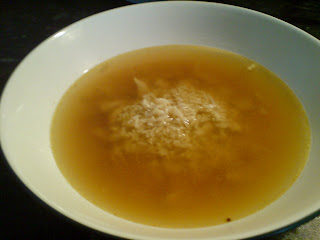
More importantly, there were some real stars that have become part of my regular repertoire, both at home and for the business, such as Green Pea Soup, June Pea Soup, Vegetable Soup, Cawl and Oyster (or Mussel) Soup.
Tuesday, July 7, 2015
Chapter 1: Soups - Completed!
More importantly, there were some real stars that have become part of my regular repertoire, both at home and for the business, such as Green Pea Soup, June Pea Soup, Vegetable Soup, Cawl and Oyster (or Mussel) Soup.
Sunday, July 5, 2015
#410 English Hare Soup
Once everything is a delicious brown, add a heaped tablespoon of plain flour, stir to cover the meat before add ½ bottle of red wine or claret and 1 ¾ pints of beef stock or consommé. On a medium heat, let the contents come to a bare simmer. As you wait for that to happen, pop in a large onion studded with a clove, a good pinch of Cayenne pepper, and ½ teaspoon each of ground mace and black pepper. Also toss in a decent bouquet garni, embellished with extra springs of parsley, rosemary and marjoram.
Tuesday, June 5, 2012
#341 June Pea Soup
Here’s a recipe that I have meant to make every summer, and every summer I have forgot. I did not expect to be making it here in America as you don’t see fresh peas in their pods very often here; I happened upon them at Soulard Market which is great for fruit and veg.
This soup is “a soup for midsummer when young peas are at their freshest and sweetest”, says Jane. In fact that is all the she says on this one. This soup has very few ingredients and it contains no stock – and no seasonings – and can be served either hot or cold. It’s not very often that you come across vegetable soups being made without stock, though the great French chef and restaurateur Marcel Boulestin knew all about the benefits of making soup in this way:
The chief thing to remember is that all soups – unless otherwise specified – must be made with plain water. When made with the addition of stock they lose all character and cease to be what they were intended to be. The fresh pleasant taste is lost owing to the addition of meat stock, and the value of soup from an economical point of view is also lost.The French gastronome Brillat-Savarin made similar comments.
Well we get to put this theory to the test in this, the penultimate recipe in the Soups chapter…
Start by shelling your peas – you’ll need to buy three pounds – and stop shelling when you get to about 1 ¼ pounds. Reserve five or six of the greenest pods. Next, chop six ounces of spring onions and sweat them in three ounces of butter, along with a very finely chopped clove of garlic. Cover the pan, and let them stew for five minutes; mind you don’t let them brown though. Add your peas and the reserved pods along with a little less than three (UK) pints of water. Bring to a boil, and then simmer until the peas are nice and tender. Liquidise and sieve the soup, reheat and stir in 6 fluid ounces of crème fraîche or whipping cream. If you want to eat the soup cold, you are essentially done – all you need to do is chill it and add a flurry of chopped mint leaves into each bowl when you serve them. If you want it hot, stir in three more ounces of butter. Again, serve with some finely chopped mint leaves.
#341 June Pea Soup. Well, well, well, I have to say I was pleasantly surprised my this delicious soup – the sweet peas and the still very slightly acrid onions worked so well and did not require anything else to make them delicious, just the touch of aromatic mint and the silkiness from the cream. I tried it cold; there was none left to try warm! 7/10.
Saturday, January 21, 2012
#327 Turkey and Hazelnut Soup
It does use some nice wintertime ingredients: hazelnuts are usually in good supply along with the brazils, walnuts and almonds; there’s the fine herb chervil which I have tried and failed to grow myself. They’re a hardy plant and good for growing in autumn and winter. Unless it is me attempting cultivation. It is obviously in season now as I have seen them twice for sale over the last months or so.
Thursday, November 24, 2011
#316 Oyster or Mussel Soup
Saturday, February 13, 2010
#223 Marion Jones's Green Fish Soup
Begin by sweating a sliced medium onion and a small sliced leek in an ounce of butter. Be careful not to let it colour. When soft, add an ounce of flour and stir for a few minutes so that the flour cooks out a little. Pour in 1 ¾ of fish stock that has been flavoured with nutmeg and fennel (crush a few fennel seeds up and grate some nutmeg in, if using fish stock cubes) and simmer for 10 minutes, then add a pound of skinned white fish fillets – cod, haddock, whiting, hake, etc. – and simmer for a further minute. Allow to cool a little before blending it. While the stock cooks, trim 13 ounces of broccoli – you can use sprouting broccoli or the more readily available calabrese broccoli – and boil in salted water until just tender. As soon as they are cooked, drain them and refresh them in cold water to give them a vivid green colour. Make sure you reserve the cooking water. Add the cooked broccoli and blend again, thinning the soup with the reserved cooking liquor. If you want to be posh, pass it through a sieve. Season with salt and pepper, and stir through some cream if you like.
#223 Marion Jones’s Green Fish Soup. This was an okay recipe, but nothing to shout about. It tasted a bit like those Findus boil in the bag cod in parsley sauce from 1970s and 80s. Remember them? The white fish and broccoli combination work well as they have a certain complementary sweetness. I wouldn’t make it again, but I would eat it if someone else cooked it for me 5/10.
Thursday, October 8, 2009
#194 Almond Soup (White Soup)
Griggers reckons that one of the reasons (apart from it tasting good) that it’s remained popular is because the ingredients are easy to come by; most being found about the house. Well, it is popular no longer – I’d heard of it, but only vaguely. Not all the ingredients are easy to come by these days either – the main reason I’ve only got round to making this now is that I managed to finally get hold of the veal knuckle required for the stock.
I always really enjoy making these sorts of recipes in the book – I don’t even mind if they’re not that nice – it’s just interesting cooking and tasting these old, old recipes. I’ve said it before, but it is great that such books like English Food exist, it’s also great to see that many of these unfashionably historical recipes are tasty and interesting. Does this one fit into that category though..?
To make the soup, you need to start the day before and get on with the task of stock-making. Start off by placing a small gammon hock (I made one myself in the brine tub!) and a good meaty veal knuckle that has been cut into three pieces in a large pan or stockpot. Add four pints of cold water and slowly bring to the boil; the slower you do this, the clearer the stock will be. When it does come to the boil, skim away any scum and add a quartered onion, a quartered carrot, four chopped celery sticks, a teaspoon of lightly-crushed peppercorns, two blades of mace, a bay leaf and a tablespoon – no, I didn’t misread the book, tablespoon – of salt. Bring back to the boil and then turn the heat right down so that the stock simmers gently away for four hours. Strain and chill overnight and skim the fat off the top. Bring back to the boil and reduce the stock until there is around 2 ½ pints remaining. Alternatively, if you simply cannot be arsed with all of that, use a light beef stock!
For the soup, place 2 ounces of blanched almonds and an ounce of white bread (crusts removed) into a blender along with a couple of ladlefuls of stock and liquidise the lot. Push the gloop through a sieve into the reduced stock. Turn the heat off under the pan. Next, beat an egg yolk into ¼ each of double cream and soured cream and whisk it into the soup, reheat, making sure the stock is not boiling, to prevent the egg from cooking and curdling. Now season with white pepper, salt (!), Cayenne pepper and lemon juice. Serve with fried croutons or fried almonds.
#194 Almond Soup (White Soup). Certainly not one for those on a low salt or low fat diet. It was very salty and rich. I assume that the tablespoon of salt listed in the ingredients is a typo since a ham hock is also used for the stock. I’m not convinced that I actually liked this soup, it was certainly nicer the next day when the flavours had time to develop. It’s certainly a posh soup, but I think it could’ve been improved by using a less salty stock. Perhaps after all this time-biding, it would have been better if I’d simply used a light beef stock as suggested in the recipe. 4.5/10.
Saturday, October 3, 2009
#193 Kidney Soup
Now I know it sounds weird, but this is a classic recipe that is also cheap – cheap because it’s main ingredient is kidney, of course. We are being told that offal and the cheaper cuts of meats are suddenly becoming popular due to the recession, but I have not seen any evidence of really from the people that I speak to (though I have in butcher's shop windows). When saying I’ve been doing this recipe, there has been nothing but pulled faces and dry retching (the only exception being Anthea – frequent blog commenter – she ate it often as a child). I must admit, however, that as much as I love kidneys, I wasn’t quite sure about eating them in soup. However, this book is full of surprises.
To start with you need a whole ox kidney; cut away any fat and gristly bits and cut up the kidney into small pieces. Brown it in an ounce and a half of butter or dripping in a large saucepan along with a sliced onion. Pour over four pints of beef stock and stir, adding some salt. Bring the stock to a boil and skim any scum that rises to the top. Add a bouquet garni and some spices: 20 peppercorns, a blade of mace and a quarter teaspoon of celery seeds. Tie the bouquet and spices in a piece of muslin first. Simmer for 3 to 4 hours, covered on the hob or in the oven.
When ready, skim any fat from the surface and strain the soup. As with most soups and stews its best let it cool down completely – overnight is best – so that you be sure of getting rid of all the fat. Pick out the bits of kidney and give them a rinse. Heat up the soup again and add an ounce of flour that has first been slaked in a tablespoon of mushroom ketchup. (The recipe doesn’t actually say what kind of ketchup, but with this being beef, mushroom or tomato are the best to use.) let the soup thicken slightly and add the kidney pieces. Finally season with more salt and pepper if required, plus some lemon or orange juice and a dash of sherry to add complexity of the flavour.
FYI: the kidneys were thought to be the part of the body concerned with conscience and reflection. Apparently, God would inspect the kidneys to see how good someone had been. In fact, one kidney was responsible for good thoughts, the other evil. The Latin word renes, is used to describe anything of the kidney (e.g. renal), but also is the root word for reins too. So there you go; a choice nugget of factoid for you there.
#193 Kidney Soup. This was a really delicious soup! I loved it the slightly spiced beef consommé was light and tasty and complimented the strong metallic gamey taste of the kidneys. It requires a bit for forethought to make it, but it is worth it I reckon. Cheap, tasty and good for you. 6.5/10.
Tuesday, September 15, 2009
#187 Soyer's Clear Vegetable Soup
I love how the book has two vegetable soup recipes and neither even entertain being vegetarian! Brilliant. We love Griggers!
To make this soup you need to begin by making a veal stock: You need to get hold of 2 pounds of veal knuckle – it seems that they are quite easy to get hold of as long as your butcher sells veal in the first place. Ask the butcher to chop it into small pieces – I couldn’t as I was at the market and had to do it myself which was a nightmare to do. Place the knuckle pieces in a large pan along with 2 ounces of butter; 2 ounces of chopped, lean unsmoked bacon; 3 teaspoons of salt; ½ teaspoon of ground black pepper; 6 ounces of sliced onion; and ¼ pint of water. Bring the water to a boil and stir the ingredients for around 10 minutes. An opaque whitish stock is created. Now add a further 4 ½ pints of water and bring to a boil, then skim, then simmer for 45 minutes. Strain the stock when cooked. You can do all this in advance, of course.
For the soup itself you need to dice some vegetables: around 8 ounces of turnip, Jerusalem artichokes or carrot, or a mixture; plus 3 ounces of mixed onion, leek and celery. Melt 2 ounces of butter or dripping in a pan and add the diced vegetables along with 2 teaspoons of sugar. Stir them until they caramelise and, when ready, add 3 pints of the stock. Simmer until the vegetables are tender. Lastly, stir through 2 tablespoons of chopped parsley or chives, or both. Serve with brown bread and butter.
#187 Soyer’s Clear Vegetable Soup. This was an unusual soup; I can’t decide if I liked it or not. I was a very thin soup that wasn’t hearty at all, so it didn’t fill any gap in my stomach! It was saved by the sweet vegetables and their caramelised coating that darkened the soup and made look quite attractive. Not sure if I’d make it again though - 5/10.
Tuesday, September 8, 2009
#185 Vegetable Soup
Obviously the soups are a good target and this vegetable soup seems perfect. I have my own recipe for vegetable soup that I’ve put on the blog before and I think it’s pretty good, she has some interesting additions such as dill and allspice berries. Let’s see if Griggers does a better one…
An important point that Griggers makes is that you don’ have to stick to any particular strict rules with this kind of soup – any vegetables will do I think. Also, this recipe for vegetable soup is not vegetarian, but it could easily be adapted by omitting the meat and using vegetable stock.
Begin by simmering a pound of sliced cabbage in 2 ½ pints of water or light stock along with 12 lightly crushed peppercorns, 6 crushed allspice berries and ½ pound of salt pork, smoked bacon joint or ham hock for 30 minutes. I would use just water if your using a hock with bone, stock otherwise. Now add 2 coarsely chopped carrots, 4 potatoes that have been peeled and cubed, 2 sliced leeks (or one leek and one onion) and a few lovage leaves (these are optional). Simmer for a further 30 minutes. Remove the meat and use it for another meal, or, as I did, chop it up and return it to the soup at the end. The soup needs to be blended now – don’t go mad with it, either pulse and partially liquidise it, or use a mouli-legumes. Found that one of those hand blenders is the best thing for this job. Finally, add one to two tablespoons of grated Parmesan, some dill (optional), cream (also optional) and season with salt, pepper and sugar. Griggers suggests eating the soup with fingers of cheese on toast or cheese and oat biscuits. I went with the latter (cheap and easy to make!).
#185 Vegetable Soup. I can’t believe I’ve not made this recipe yet! Well I have to say it beats my vegetable soup hands down. The soup is very hearty and the addition of the salty piquant cheese and the lemon-fresh dillweed really transform it into a pretty macho vegetable soup. 8/10.
Thursday, September 3, 2009
#182 Apple Soup
So thrifty folks, here’s how to make your own taste of Medieval England:
Start off by simmering some pearl barley and/or rice in some beef stock until cooked. Next bring 2 ½ pints of beef stock in a saucepan. Meanwhile, roughly chop roughly around 12 ounces of either cooking apples or Cox’s apples ; no need to peel or core. Add the apples to the beef stock and simmer until soft. Strain and push the apples through the sieve, and then add half a teaspoon of ground ginger and a quarter teaspoon of ground black pepper before stirring in the rice or barley. Serve very hot.
#182 Apple Soup. A strange one, this one. It’s not the most exciting – it is what it is, apples and beef, and I’m hardly about to do cartwheels over it, but I did grow to enjoy it after a few spoonfuls. The texture was quite appealing, the high pectin content of the apples makes it slightly viscous and gloopy, and combined with the thickening barley and rice made it seem more substantial than it was, which is good as it’s almost totally calorie-free. Would I make it again? Only when I’m very poor. It’s interesting to eat some food that has some history though. 5/10.
Friday, July 10, 2009
#165 Indian Soup
To start, bring 3 pints of beef stock, 2 large sliced onions, a large Bramley apple, a tablespoon of desiccated coconut, 2 teaspoons of curry powder and the bones from a chicken or game carcass (minus meat scraps) to the boil and simmer for an hour. There is no need to peel or core the apple, because the stock is then strained through muslin into another pan. The resulting cloudy stock now needs to be made clear – this is a two-stage process. First, use kitchen paper to blot off any fat that may have risen to the top; secondly, put over a moderate heat and whisk in two egg whites. Keep whisking for a few minutes and then leave to simmer for five more without stirring. The idea here is that as the egg whites cook they mop up any solids that make the soup cloudy. When ready, strain again; the result should be a lovely golden-brown and clear broth. Season it well with salt and both black and Cayenne peppers, plus a squeeze of lemon juice. Finally, add a few tablespoons of boiled basmati rice and the shredded scraps of meat.
#165 Indian Soup. Well, Griggers was right – it is a delicious soup, clear, spicy and fruity with a lovely tart finish supplied by the lemon and Bramley apple. It would make a perfect starter to a meal – not too filling and interesting in its flavours. However, it is a bit of a faff – it’s not something that can be thrown together and liquidised at the end of cooking, and although tasty, I’m not sure if it’s worth the effort (making a clear consommé is a tricky business). After weighting up the pros and cons, I’ll give it 6.5/10.
FYI: a simpler way to clarify a stock is to freeze it and to let it strain through muslin slowly overnight in the fridge. Obviously you need to remember to make the stock a couple of days before you want to use it, but it’s very easy indeed! It also gives a more clear stock too in my experience.
Wednesday, January 21, 2009
#107 Chestnut and Apple Soup
This makes enough for 6:
This soup requires a pound of chestnuts, and the first job is to pierce either end of each and every one with a sharp knife. Plunge them into boiling water for 10 minutes. Use a tea towel to grasp onto them with one hand and a sharp knife to remove their softened shells with the other and discard any bad ones; don’t worry if they are not whole. Keep them in the hot water as you peel them to keep the shells soft. Simmer the chestnuts along with one stick of celery in 3 ½ pints of light beef stock for 20 minutes. In the mean time, peel, core and slice two Cox’s Pippin apples. Simmer the apples in 2 ounces of butter until they soften, seasoning well with black pepper. Add the apple and juices to the stock and liquidise the whole thing until smooth. Return it to the pan, check for seasoning, and stir through 4 fluid ounces of single cream. Don’t let the soup boil if you are retuning it to the heat. Serve the soup with croutons fried in butter.
FYI: if you are lucky enough to know where there is a sweet chestnut tree, you can make shampoo from cooking up the leaves and peel.
#107 Chestnut and Apple Soup – 6.5/10. A very nice creamy-pale soup. Rich, yet light at the same time. I would certainly recommend this one; it would make a very good first course. Two apples didn’t really make it taste that much of apples, so it loses some marks for that – I would do three.
Friday, January 16, 2009
#106 Mulligatawny Soup
FYI: the word Mulligatawny comes from the Tamil, an Indian language, and means pepper water, and it came here in the Eighteenth Century.
This makes a big old load of soup, enough for 5 or 6 people:
Begin by chopping the boiling chicken into pieces and brown it in 2 ounces of butter, along with a sliced onion. Now add 1 ½ tablespoons of curry powder – either mild, medium or hot (I went for medium, but added a pinch of chilli powder) – and 8 ounces of yoghurt, plus some salt. Fry all this until the yoghurt reduces and becomes a thick crust on the bottom the pan. Be careful not to let it burn though. Add 3 pints of water and let it all come to a simmer. Cook for around an hour and a half until the meat is falling off the bone. Pick the meat off the carcass and chop it up, if need be, retuning it to the pan and chucking out the bones. This is a good point to leave the soup overnight, so any chicken fat can be skimmed off easily. Melt another of butter in a separate small saucepan and add 4 cloves; apparently, the cloves soften after a few minutes if cooked gently and can be crushed with a spoon. This didn’t happen for me. Hey-ho. Add the juice of lemon and pour the butter mixture into the soup. Season with more salt if appropriate. Serve with some boiled rice and some chopped apple sprinkled on top.
#106 Mulligatawny Soup – 4.5/10. Not a bad soup, but decidedly average. When I first tried I thought it was surprisingly light and refreshing, but then as I tried it again, I decided I wasn’t sure. It sat in the fridge for a bit and I realised I wasn’t going to eat it, so it went off the bin. I think I was disappointed because it wasn’t what I expected. I’ve had Mulligatawny from a tin and was sure it contained some kind of red meat. Flicking through the book, I spotted another soup called Indian Soup, which looks a lot like what I thought Mulligatawny was.
*Joke
Tuesday, January 13, 2009
#103 Mutton and Leek Broth
FYI 1: the neck of a lamb/sheep/veal calf is split into three sections: scrag end nearest the head, which is mainly bone. This is a good thing for broths as it imparts flavour to make a delicious stock. Apparently scrag end is an old fashioned term, and we say ‘round end of neck, presumably because scrag end doesn’t sound too appetising. There’s mid-neck or middle neck and best end of neck too – I’m sure I will get to them in some other recipe.
FYI 2: mutton applies to sheep that have more than two permanent incisors in wear, usually over ayear old.
For 6-8:
Like many soups and stews that involve cooking joints and bones up, it’s best to cook it the day before, also the pearl barley requires soaking time so keep this all in mind.
Start by rinsing and soaking 4 ounces of pearl barley in water for four hours. Do some light housework in the meantime, or maybe just watch a film in between. Drain the barley and put it in a large saucepan or stockpot. Trim off any excess fat from the meat (keep any big chunks and freeze them and use for Singin’ Hinnies, which I’ll be cooking very soon) and add the chunks to the pot along with 4 pints of water. Bring it to the boil and simmer it gently for an hour before adding the vegetables: 5 ounces of diced carrot, 4 of diced turnip, a stalk of chopped celery, a chopped leek and 5 ounces of chopped onion. Season with salt and pepper at this point too. Let the broth simmer for at least another hour until the meat is falling off the bones. Cut the meat up and return it to the pot and discard the bones. Skim any fat from the soup – this is the point to leave it over night; solidified fat is much easier to remove. Bring back to the boil and correct the seasoning with salt, pepper, sugar and cayenne pepper. Be quite liberal with the sugar and salt. Slice a second leek thinly and add to the broth along with some chopped parsley and turn off the heat; the residual heat will cook the leek. Serve with granary bread and butter.
#103 Mutton and Leek Broth – 6.5/10. A nice soup that needed a lot of seasoning to make it delicious. I really liked the mild mutton flavour and the pearl barley, but expected it to be much more flavourful. That said, because the batch I made was so big I was still eating it three days later and it did get better as time went by.
Wednesday, December 17, 2008
#98 Cawl
These measures make loads of Cawl – enough for 6 to 8 people.
Start off by browning your meat in some beef dripping; you need pounds altogether, either beef brisket of shin of beef, but best is to use one pound of beef and a pound of smoked hock, gammon or bacon. I went for brisket and a giant piece of smoked bacon. When browned, put in a large saucepan or stockpot. Next, brown 2 sliced onions and 3 carrots, parsnip, turnips or some swede cut into chunks; a mixture is best. Once they are browned, add them to the meat and cover with cold water, add salt and two stalks of chopped celery. Bring to the boil slowly, skimming off any scum that may rise to the surface. Add a bouquet garni (I used parsley, thyme and bay), sea salt and pepper to season, turn to a very low heat and simmer for at least three hours. I actually did all this the day before, so that we didn’t have to wait very long to eat when we got back.
About half an hour before you want to eat, add a pound of small potatoes (or larger ones cut up), and ten minutes before add a small white or green cabbage that has been sliced. When the potatoes are cooked the soup is ready. Finely slice 2 or 3 leeks and sprinkle them on top of the soup; the heat of the soup will cook them. Remove the joints and slice them up, putting some of each kind in each bowl, along with some of the veg and stock.
#98 Cawl – 7/10. A delicious, warming and beautifully clear soup. The meat was falling apart and the smoked bacon gave the whole thing a really delicious flavour. Definitely one of the best soups so far. This will become a staple winter dish, I think.
Sunday, October 5, 2008
#80 Oxtail Soup
I got the oxtails from W H Frost in Chorlton – a very good butcher. I chatted to the man briefly and he mentioned that he could pretty much get anything I want in as long as I order it in plenty of time. Good man! The butcher in Levenshulme is good for the basics, but it’s nice to see there’s somewhere I can get the weird and (not so) wonderful stuff.
I would recommend to giving it a try. If you’re not used to strange cuts or offal, then this is the place to start. It’s not particularly gory and the meat is pleasantly beefy. However, you need to start it the day before you want to eat it.
From this....
...to this!
The day before:
Start off by removing any surplus fat from the tail that the butcher didn’t quite get rid of. Chop three stalks of celery, stud an onion with three cloves and slice a small turnip and a carrot. Next, melt 2 ounces of butter in a large pan and brown the meat and vegetables. This takes about 10 minutes as there’s quite a lot of stuff in the pan. Don’t be coy; have the heat quite high, as you don’t want the vegetables to stew. Give a stir now and again. Meanwhile make a bouquet garni – I used 2 bay leaves, a sprig of thyme some parsley stalk (all fresh, but kept in the freezer). When sufficiently browned, add the bouquet along with 4 pints of water and a teaspoon of peppercorns and season with salt. Bring to the boil, cover and simmer gently until the meat is coming away from the bones. This took around four hours. Strain the beefy stock you have created into a bowl and allow to cool. You can discard the veg, but I ate them! The final job is to pick the meat from the bones and plop the meaty chunks back into the soup. Refrigerate the soup over night.
On the day:
Much easier! You’ve done the hard work. Using a spoon, skim off the fat that has risen to the surface and solidified. Reheat the soup to simmering point and add 5 tablespoons of port. This makes all the difference. Don’t dare miss it out. Check the seasoning, you can be pretty bold I reckon. If it is not beefy enough, cheat as I did and add a small amount of stock concentrate.
#80 Oxtail Soup – 7.5/10. Even though I cheated, it is still a beautiful soup. The simple combination of a well-flavoured stock, chunky beef and the sweet port wine is addictive!
Thursday, August 7, 2008
#69 Watercress Soup
FYI: Watercress is one of only three indigenous vegetables we have in Britain (the other two are samphire and kale). It's strange how none of them are regularly eaten.
Freezing your watercress soup results in something that resembles pond water - beware!
Start off by dicing a pound of potatoes and slicing an onion. Soften these in a covered saucepan in a little water until soft – keep an eye on it, as you will have to top it up a couple of times. Measure out 2 ½ pints of chicken stock before attempting to blend the potatoes as you may need to some of it to add. Add the liquidised potatoes along with the rest of the stock to the pan and reheat without boiling. Chop 2 small bunches of watercress and stew them in butter for around minutes and add them to the soup. Season with salt, pepper and nutmeg and add two tablespoons of cream to enrich it.
#69 Watercress Soup: 5/10. OK, but I prefer watercress as a salad leaf I think. It has a nice texture to it and the pepperiness does come through, though is hampered by the fact it is cooked.
Wednesday, August 6, 2008
#68 Carrot and Tomato Soup
Soften 8 ounces of sliced carrots and a medium-sized, chopped onion in 2 ounces of butter. Add 8 ounces of peeled and chopped tomatoes and 1 3/4 pints of stock and gently simmer until the carrot is cooked. Liquidise and pass through a sieve to remove seeds before returning to the pan. Season with salt and pepper and add 1/4 pint of single cream and some chopped chives.
Soup 7/10; attractiveness 1/10.
#68 Carrot and Tomato Soup – 7/10. Really delicious. Sieving it and adding cream made it really silky and smooth, which is important when you can hardly open your mouth. It freezes brilliantly too.
Tuesday, August 5, 2008
#67 Green Pea Soup
Start off by softening a chopped, medium onion in 2 ounces of butter until soft and golden, but not brown. Next add two rashers of smoked streaky bacon that have been chopped to. Fry for a couple of minutes and then add 1 3/4 pints of light ham stock and 8 ounces of peas and simmer until cooked. Liquidise and add more water or stock if it’s too thick. Re-heat, season and stir in some chopped parsley.
#67 Green Pea Soup – 8.5/10. A lovely warming soup. It was the first thing I ate when I got back from the hospital and is certainly my favourite soup from English Food thus far. Get it made!