Showing posts with label biscuits. Show all posts

Friday, July 13, 2018

Chapter 7: Teatime - Completed!


When I started this project, baking wasn’t the seemingly national pastime as it is now since the rise of the behemoth that is The Great British Bake Off, but it was something I liked to do and was okay at, but certainly had a very narrow baking repertoire. I certainly never baked bread or biscuits, my cake-making was average, but I did make a passable shortcrust pastry. After baking my way through the recipes in this chapter, my world was opened up to a vast array of sticky, spicy, sweet and sometimes stodgy treats, many of which are now standards in my own cooking.

Baking #429 Cumberland Currant Cake
People are sick of mass-produced cakes and biscuits devoid of real flavours, covered in single-use plastic wrapping. Many of the recipes were quite obscure then and I wouldn’t have bothered with them normally, they seem less so now as people all over the country are looking to tradition in their home baking. That said, some recipes in the book are still obscure and old fashioned: you still don’t see #227 Wigs, #62 Seed Cake, #274 Saffron Cake or #431 Murrumbidgee Cake. All these recipes can be found within the pages of English Food.

#113 Muffins
The Teatime chapter was a whopper; so big  I had to split it into four parts, otherwise it would have felt like a never-ending task as there were 72 recipes!
I split them into:
·       7.1: Bread (15 recipes)
·       7.2: Cakes & Tarts (35 recipes)
·       7.3: Pancakes & Griddle Cakes (13 recipes)
·       7.4: Biscuits (9 recipes)
Click on the hyper-links to see my reviews of the four sections.

The chapter scored an overall mean score of 7.0, which seems pretty average for the book so far. For those who care (and I know none of you do), here’s a little bar chart showing the mean scores for the chapter as a whole and then the separate subchapters. There are even error bars, don’t say I don’t treat you.
One important thing I learnt was that Teatime treats are not always sweet cakes and biscuits, but sandwiches made with a variety of breads, toast, muffins and crumpets.

There are blurred lines between my distinctions too; cakes used to be leavened with yeast before the advent of chemical raising agents so there is a continuum between bread and cake, cake and tart, tart and biscuit, biscuit and cake.

#186 Cheese and Oat Biscuits

But where does our obsession with teatime come from?

Well, tea had been drunk in Britain from around 1660; Charles II enjoyed a cuppa char every now and again, that’s for sure. However, it was extremely expensive and only the richest of folk could afford this exotic Chinese drink. It only really started to catch on when Assam tea plants were discovered to be growing in India in the 1820s. Prior to this, the Chinese had held the whole process of tea growing and drying under a shroud of secrecy. The British could buy their tea much more cheaply – it was also the catalyst for the British occupation of India, but that’s a story for another day. It was still expensive at this point, but the upper and middle-upper classes starting drinking it with gusto.

Anna, 7th Duchess of Bedford
The idea of teatime as we know it originates in the mid-19th century when the 7th Duchess of Bedford started asking for tea and bread and butter to be served to her in her room at 4 o’clock. The reason she did this was to quash her hunger pangs as she waited for dinner at 9 o’clock. Then, the only other meal of the day was breakfast. She started inviting her lady friends to enjoy her, and soon her lady friends began their own teatimes and invite other ladies to attend. The Duchess was very prominent in society and was good friends with Queen Victoria, so when her Royal Highness decided to start taking tea in afternoon too, the country went nuts.
The Queen had elaborate teas, and whatever she was doing, and wherever she might have been, she stopped for tea at around 4 o’clock. It would be very common for an en route queen to stop her carriage and entourage, for a fire to be lit at the roadside, and for her to sup tea and eat the associated treats. She loved travelling and eating but found it much less exciting once her travel occurred mainly by train and there was no need to stop for tea anymore!

Making dough
Ladies had to be seen hosting teatimes and attending teatimes, one must have needed quite some stamina to trawl across the town or village several times so that one could be noticed.
Some disapproved of teatime, Sir Henry Thompson in 1891 said it was an undesirable habit as it was too generous and spoiled the coming dinner. He may well have been right, those poor ladies must have eaten and drank their fill when doing their rounds.
A truly traditional teatime is made up of sandwiches of cold meats and watercress. Cucumber was not originally popular as people regarded it with distain thinking raw cucumber was poisonous. It was also a rigmarole to prepare the sandwiches in advance; just using sliced cucumber made sandwiches soggy, so the slices had be salted overnight to draw out moisture, then rinsed and individually patted dry.

#270 Mereworth Biscuits
Joining the sandwiches were crumpets, muffins, wigs and seed cakes. Seed cakes were very popular because the caraway seeds that went into them were one of the very few spices that could be grown in Europe. There would be lashings of butter, honey and jam too of course.
Sweet sponge cakes like Victoria sponges were not generally eaten by the grown-ups, but instead made up the bulk of the nursery tea, though I’m sure there are many adults today who would prefer it!
I spotted a great reference to a Victorian book called Walsh’s Manual of Domestic Economy, which recommended, as part of a child’s teatime, a wineglass of homebrew to ‘restore health to the most delicate children’. Get that top tip on Mum’s Net!
Personally, I am very glad that home baking and teatime have regained popularity in Britain. I hope it’s not a fad and we all start buying Mr Kipling’s Fondant Fancies again in 18 months’ time or whatever.
Long may it continue!

Monday, June 5, 2017

7.4: Biscuits - completed!


So, I have completed another section of English Food! The Biscuits section of the Teatime chapter was quite short with only nine relatively easy recipes; yet it has taken me all this time to bake them!
That said, it’s a surprise that it is so short, as there is a great tradition of biscuit-making with many diverse regional recipes. Jane reckoned that biscuits are one of the few successes of the manufacturing industry, meaning folk are more reluctant to bake them today. She’s probably right, and I expect it is why the section is so short.

Grasmere Gingerbread II
Biscuits come in essentially two forms in Britain: sweet and savoury, the latter more often called crackers. They all have a common ancestor: the ship’s biscuit. A hard, dry rusk that could survive long journeys at sea without spoiling. They were boring, but provided sustenance, often crumbled into broth or hot drinks; our love today for dunking our biscuits into tea and coffee is a throwback to this.
The original biscuits were made from breadcrumbs, reformed and baked in cooling bread ovens (biscuit literally means ‘twice-baked’). Biscuits began to get rather more interesting during the times of the Crusades where the laying down of the spice trading routes, brought not only spices but also sugar (then considered a spice) to Britain. More upmarket biscuits were a mixture of honey and fresh breadcrumbs and were highly-spiced – a Mediæval recipe is included in the book and very good it is too.
But it is descendants of the hard and dry ship’s biscuits that have survived  – Grasmere gingerbread, shortbread, digestives, Rich Tea, Hob Nobs, cream crackers, Ritz crackers, Nice biscuits are all based on them! The list is almost endless.
Cheese and Oat Biscuits
Perhaps it is not the most exciting part of the book, but I there are some real gems in here. I have used  Jane’s recipes for Shortcakes and Grasmere Gingerbread since I first started The Buttery, and the excellent Brandy Snaps were used as part of the dessert in my very first pop-up restaurant. I’ve not found better recipes to this day.
Biscuits are much easier to make than cakes or breads, so if you haven’t done much baking, they are probably a good place to start – though they do have to be watched as they do catch easily.

Making Brandy Snaps
All the recipes in the section are listed below as they appear in the book with hyperlinks and the score I gave them out of ten. The section scores an average of 7.6, the second best mean score so far; the recipes were perhaps not particularly exciting but they were reliable

Tuesday, June 4, 2013

#377 Brandy Snaps


An English classic, one of which I have never made; I’ve eaten plenty of them of course, but never really bothered about going the whole hog and piping cream into them. Fearing I was a becoming a biscuit heathen I did a little research and found that in many parts of England, especially the south and London, people ate them on their own as large rounds, rather than the familiar cigarette shapes where they called them ‘jumbles’. Phew.

Don’t fear the brandy snap, it turns out they are not as difficult to make as people say, though a little patience is required for the first few before you get into your stride: too hot and they tear (and burn!), too cool and they cannot be shaped and break. Do them one at a time and if the others get too cool, pop them back in the oven for a few seconds to soften again. No probs!

This recipe makes up to 36 brandy snaps – that seems a lot, but they keep for weeks in an air-tight box.

To begin, melt together 4 ounces each of butter, golden syrup and granulated sugar in a saucepan. Mix until everything has melted and is smooth, but be careful not to let it boil. Take off the heat and when ‘barely tepid’ mix in 4 ounces of plain flour, a pinch of salt, 2 teaspoons of ground ginger, a teaspoon of lemon juice and 2 teaspoons of brandy. This seems like a paltry amount of brandy but it really does make a difference to the flavour.

Preheat the oven to 200⁰C (400⁰F) whilst you get on with spooning out the mixture onto baking sheets. The best thing to do here is to cover two large baking sheets with greaseproof paper and to spoon out sparsely teaspoons of the mixture; these things really spread so you’ll only want 4 or 6 spoonsful per sheet. Make sure your spoons are small, equal in size and neat; I found that using a melon-baller helped here.

Bake them for about 8 minutes until they have spread, darkened and bubbled up. Remove from the oven and let them cool a little before shaping. For the classic cigarette shape lift one of the paper using a palette knife – if it tears then it is too hot – and lie it across the handle of a wooden spoon and fold it over. Slip it off and do the next one; if too cool pop back in the oven. To make basket shapes, lie the brandy snap over the base of a jam jar.

If you want to fill the brandy snaps, whip up ½ a pint of double cream and pipe the cream inside. There’s no need to sweeten the cream here as the snaps themselves are so sweet.

#377 Brandy Snaps. These were absolutely delicious – crisp, slightly spiced caramels that cracked satisfyingly into bland cream (Bland is not always bad!). Lovely, and so much better than bought. Go make some! 9/10
 

Thursday, March 7, 2013

#371 Oatcakes


I love an oatcake – in fact I love oats in general, they are my favourite of the cereals.

You may think that Jane Grigson is taking liberties (and she has done this many times already) by including a Scottish recipe in a book of English Food, but you would be mistaken. Oats were the main cereal crop for the most of northern England as well as parts of Wales too; wheat was for the rich and oats and barley for the poor. In Scotland, oats were the only cereal that would grow, so oats have become more synonymous there than in England or Wales.

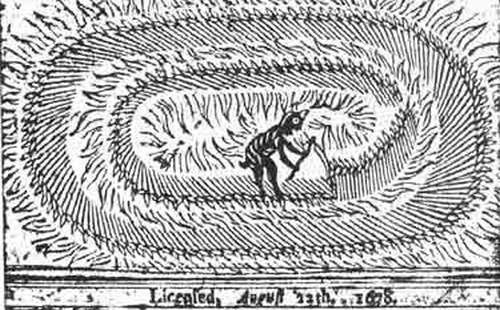
The best thing I found out was that an oatfield fell victim  to a crop circle in 1676 - the first ever recording of one! The woodcut below shows that people assumed it was the work of the devil, rather than men from outer space.

 
To make true Scottish oatcakes, you need some specialist equipment (the recipes themselves hardly differ); a spurtle, which is a wooden stick used to for stirring and mixing and it looks a bit like Harry Potter’s wand; a special rolling pin called a bannock-stick that leaves a criss-cross pattern on the rolled out dough; a spathe, a special piece of equipment that is used to move the oatcakes from board to girdle that is heart-shaped with a long handle; then there is the banna-rack, a toaster used to dry the oatcakes.  I do own a spurtle, but the other pieces of equipment are rather more tricky to get hold of.
You can make oatcakes large or small, leave them whole (bannocks) or cut into quarters (farls). Here endeth today’s Scottish vocab lesson. I found this wealth of information in a great book that I picked up in a second-hand bookshop in Inverness last year. It is called The Scots Kitchen: Its Lore & Recipes by F. Marian McNeill and it’s well worth getting hold of a copy.

Oatcakes are somewhere between a pancake and a biscuit, but appear in the Pancakes & Griddle/Girdlecakes  section of the Teatime chapter and not the Biscuits part. I think I would classify them as a biscuit even though they are cooked on a girdle because they’re so crisp; after their initial cooking , they would be dried out in front of the fire and then stored in a meal-chest or girnel covered in oats. We use Tupperware today of course.

I made these oatcakes to take up with me on a visit to my friend Frances who lives in an amazing 17th century house in the Lake District. In her instructions, Jane says to ‘toast lightly before the fire before serving them’, and Frances’s house is not short on proper roaring fires as you can see by the photo below.

Mix together 4 ounces of medium oatmeal with 4 ounces of plain flour and a level teaspoon of salt, then rub in 2 ounces of lard, dripping or poultry fat (vegetarians can, of course, use hard vegetable fat, but be careful to buy some not made from hydrogenated fats). Mix in enough cold water to make a soft dough. Roll out thinly on a ‘oatmeal-strewn board’ and cut out circles using a scone cutter.
 
To attain really thin oatcakes, Jane suggests slapping them ‘between your oatmealy hands. I tried this but it was difficult. I found it much easier to roll and cut out circles, then rolling the circles separately on the board. They weren’t perfectly circular, but they were very thin and crisp. The mixture made me 16 good-sized oatcakes.
 
Before you griddle to oatcakes make a glaze by beating together an egg with a tablespoon of milk and a teaspoon of sugar.

Heat up an ungreased griddle or other suitable heavy-based pan. When hot, place the oatcakes on the griddle and paint them immediately with the glaze. Let them cook through – you know this is happening because the glaze dries and goes shiny when they’re done. There is no need to turn them.
 
Cool on a wire rack and store in an airtight container and toast them dry in front of a lovely fire, or failing that back on the griddle or in the oven.

We ate them fresh from the fire with butter spread on them.

#371 Oatcakes. These were very good indeed, they were good and salty and the slightly sweet glaze counteracted it perefectly. Most importantly the almost too-heavy seasoning brought out the lovely toasted oatiness – I think it is important to say that I used organic oats, and I am sure that this made a difference because it really was a hit of oat flavour. I loved how they all curved and curled as they cooked too. Very good 8/10
 

Wednesday, August 31, 2011

#308 Walnut Biscuits

The blog has been a little quiet of late because of a combination of business and broken car. This means that I’ve not been able to explore St Louis’s butcher’s shops, markets et cetera anywhere near as much as I’d hoped this month. However, there are still a few simp recipes to do in the book and this is one of them. I had hoped to not do any recipes from the Teatime chapter of the book because I have done so many and there are so many under-represented chapters. However, beggars cannot be choosers, so I made these walnut biscuits that are very similar to the sugar thins I made ages ago. Don’t feel guity about eating a load of these either; walnuts have more antioxidants than any other nut. You might end up a fat little piggy, but you’ll have none of those pesky free radicals aging the skin of your three chins.

Start off by creaming together seven ounces of softened butter with five ounces of caster sugar. Next, beat in a large egg and then eight ounces of self-raising flour and three ounces of chopped walnuts.


Spoon a third of the mixture onto a rolled out piece of cling film and roll it up tightly to form a sausage shape that is about 2 inches in diameter.


Repeat with the rest of the mixture. Put the sausages of dough in the fridge to harden up over-night. You can freeze them like this too.


Next day, peel away the cling film and slice up the dough thinly and place on baking sheets. Bake for no more than ten minutes 190°C (375°F).


Griggers reckon they go well with coffee, and I am sure they do, but as I am not allowed to drink coffee anymore (Doc’s orders), it’ll have to be a tea.

#308 Walnut Biscuits. A nice, crisp biscuit that is sweet and crumbly; it certainly would go with unsweetened coffee or tea. The only problem with them is that there weren’t enough walnuts. I would go to four or maybe five ounces of walnuts. 7/10

Wednesday, January 26, 2011

#270 Mereworth Biscuits

The move back to Houston after almost a month back in England has left me very homesick indeed and definitely in need of some therapy of some kind, especially when Sunday came around. Personally, I find nothing more therapeutic that having a good baking session. Unfortunately, I could not arsed to leave my flat and buy ingredients.  The Teatime chapter of the book has received the most attention out of all the chapters, and I assumed that all the remaining recipes required either ingredients or equipment that I have not yet acquired.  Not so, these little savory biscuits; they are made up of just plain flour, butter, milk and a pinch of salt.
I’d not heard of these before, but they are supposed to be served with butter and cream cheese and that sort of thing. I don’t like to quote big chunks of Jane Grigson’s writings on the blog, but I think this post requires it – her little introduction to this recipe is so evocative that I can’t resist. Enjoy:
We once looked down on the perfect Greek cross of Mereworth Castle through young beech leaves, not long after we had visited the Villa Capra at Vicenza, which stands right up on a dusty hill surrounded by long grass. And here in the spring countryside of Kent was this perfect replica, with the same collected elegance, far below the valley. I should like to see the kitchens of Mereworth, where these biscuits were made in the nineteenth century.”
God, she is good. It’s a shame she is no longer with us. She goes on to tells us that the recipe comes from a book called Choice Recipes by a certain Lady Sarah Lindsay.

Mereworth Castle


This recipe make quite a large number of biscuits, I imagine that the dough will freeze perfectly well like most biscuit doughs do. It’s also a very easy dough to make, so if you’ve never baked before, this could be a good initiation!
Begin by rubbing one ounce of butter into eight ounces of plain flour along with a pinch of salt. Make a well and add some hot milk, bring the dough together adding more hot milk until it becomes firm but soft. Give it a knead. There’s quite a lot of lee-way here, unlike pastry, the hot milk and kneading is supposed to make the dough stretchy and it can take quite a bit of liquid. If it is a little too wet, sprinkle with some more flour. The dough can now be rolled out extremely thinly – make it as thin as possible, so thin you can see the work surface beneath. Cut out two inch circles with a plain biscuit cutter and bake for no more than five minutes at 220°C (450°F) until slightly golden. Some will produce giant bubbles others will not, but they will look beautifully home-made! Keep somewhere airtight as they do go soft very easily.
#270 Mereworth Biscuits. These were quite nice and went well with whatever bit and bobs I found in the fridge to eat with them. I do like cheese and biscuits but rarely ever think to buy them, apart from at Christmastime. These were good, but there are more English savory bikkies that I personally think are better, so I’m going to give them a safe 5/10.

Thursday, July 29, 2010

#248 Mazarines

I had made a savoury snack for the party and so I thought I’d make something sweet. These are strange little biscuits, or perhaps cakes. I’m not sure which. They appear in the Cakes and Tarts section, but look like biscuits. For some reason, this is important. Anyways, the name of these sweetmeats are a mystery, probably invented in honour of either the Duchesse de Mazarin who lived in Chelsea for a bit, or Cardinal Mazarin of France.

First, the pastry: Cream together 2 ounces of butter with a tablespoon of caster sugar, then beat in an egg yolk, before mixing in 4 ounces of flour and an ounce of ground almonds (use your hands to bring it all together). Roll it out into strips about 2 inches wide, lay on greaseproof paper turning up the edges ready for the filling.

For the filling: Start by spreading some apricot jam down the lengths of the strips. Next, beat 2 egg whites until stiff and fold in 4 ounces of caster sugar, 2 ounces of flaked almonds and a tablespoon of grated plain chocolate. Pour into a saucepan and boil, stirring as you go so that it doesn’t catch. Spoon the mixture onto the strips – a tricky endeavour. Bake at 180⁰C for 45 minutes, allow to cool and then cut on the diagonal.


#247 Mazarines. These were also a disappointment. The pastry was very dry and crumbly and the filling was so unbelievably sweet. Annoyingly, they were nigh on impossible to cut without them breaking up. Not impressed. If were Cardinal Mazarin or the Duchesse de Mazarin, I’d be well pissed-off that these efforts were created in my honour! 2.5/10

Wednesday, July 14, 2010

#244 Grasmere Gingerbread II

Ah, the Lake District. Hugh and I were not far from Grasmere only last weekend on a little break so I thought I’d make the second of the Grasmere Gingerbreads. You can just imagine William Wordsworth tucking into these after his daffodil sandwiches of an afternoon or whatever. It’s what we would have done if it HADN’T PISSED IT DOWN all weekend. Hey-ho.

This is a bit different to Grasmere Gingerbread I in that it is made with wholemeal flour. Usually wholemeal flour based biscuits and cakes are found in the vegan health food shop and taste awful, but don’t let that put you off; these are delicious and easy to make too:

Start by sieving 8 ounces of flour along with ½ teaspoon each of cream of tartar and bicarbonate of soda and 3 decent teaspoons of dried ground ginger (don’t be scanty, it can take it). Rub in 6 ounces of butter and then mix in 5 ounces of soft dark brown sugar and a dessertspoon of golden syrup. You should end up with a dark rubble. Line a roasting tin or oblong pan with greaseproof paper and pour the mixture in, pressing it down firmly. Bake for 45 minutes at 160⁰C. Remove and cut into rectangles whilst still hot and cool on a rack.


#244 Grasmere Gingerbread II. Really good this one. The wholemeal flour and treacly taste combine well here to make a rich crumbly, though very slightly chewy bittersweet biscuit. I shall definitely be making these again. I reckon if crushed, they would make a very good crumble topping. Tres bon. 7/10

Wednesday, September 9, 2009

#186 Cheese and Oat Biscuits

To go with the vegetable soup I made yesterday, Old Griggers recommends these cheese and oat biscuits to help pad it out into a main meal. Indeed, they go well with most soups, she says. She also says that they are good piled high with cream cheese, finely chopped onion and Cayenne pepper. I’ve never made my own savoury biscuits, so I was interested in seeing how these turned out. They are also cheap to make; a prerequisite these days.


Mix together 3 ounces of rolled oats with 5 ounces of plain flour and rub in 3 ½ ounces of salted butter. Next stir in 4 ounces of grated cheese – a mixture of grated strong Cheddar and Parmesan (I did a ratio of about 3:1) and form it into a dough with two egg yolks. Use a little cold water to bring it together if need be. Season the dough well with salt and pepper. Now roll out thinly and cut our rounds with a scone cutter, place them on a greased baking tray and bake at 200⁰C for around 10 minutes until golden. Cool on a wire rack.

#186 Cheese and Oat Biscuits. I was really impressed by these. So impressed, in fact, that I managed to scoff them all over the course of the evening. Both the use of strong cheeses and a good seasoning is very important, and that is what makes them so much better than any cheese biscuit you could buy. The fact that they’re a piece of piss to make is an added bonus! 8/10.

Friday, July 31, 2009

#174 Grasmere Gingerbread I

Gingerbread is of course, not bread but a biscuit. According to Griggers, the biscuity gingerbread that we know and love, and (I assume we use for gingerbread men) is in fact Grasmere gingerbread, and although you can buy it and make it, the original recipe is a secret. Apparently, it is still sold in Grasmere from the local church (William Wordsworth is buried in its grounds). There’s another Grasmere Gingerbread recipe in English Food as well as a Medieval Gingerbread – gingerbread has a long and chequered past, but I’ll save that story for that entry.

One weird thing though – there’s no other gingerbread-type things in the book; where the heck is the Yorkshire Parkin? I shall add it to ever-increasing list of glaring omissions from the book.

Melt 5 ounces of slightly salted butter over a low heat and allow it to go tepid. Meanwhile mix 8 ounces of plain flour (or fine oatmeal, or half-and-half) with 4 ounces of pale soft brown sugar, a teaspoon of ground ginger (though I misread and added three, it was fine and suggest adding three instead of one) and a quarter teaspoon of baking powder, then add the butter and mix well. Press the mix down well with your hands in a baking tray that has been lined with baking paper and bake at 180°C for 30 minutes. Remove from the oven and cut into oblongs, but allow to cool in the tin.


#174 Grasmere Gingerbread I. I’ve not done many of the biscuit recipes from the book, as I don’t really get that excited about them, but these were delicious and very easy to make. I’ll never do cartwheels, however, so I’ll give them a stoic 7.5/10.

Thursday, February 26, 2009

#120 Mr Frost's Chocolate Cake

This one is a piece of piss to make and comes from a chap who owns (or, I presume owned now, as this book is quite old) a restaurant in Cirencester. Griggers likes it as it’s a nice classy version of chocolate cornflake or Rice Krispie cakes (though try my Mum’s recipe).

For this you need chocolate (plain or dark or a mixture), butter, nuts (any type – I used almonds and hazelnuts which are essential, you could use walnuts but peanuts are “right out”) and digestive biscuits. Weight out equal amounts of chocolate, butter and digestives and half the total weight of nuts. Roast the nuts for about 25 minutes in a low oven and remove any skins by rubbing them with a cloth, then chop roughly. Melt the butter and chocolate over a low heat. Keep an eye on them whilst you chop up the biscuits into small squares – don’t worry if there’s loads of crumbs, this is a good thing. Once the chocolate and butter have melted, mix in the nuts and biscuits. Pour into a lined tin so that it’s about a finger thick and cool in the fridge. Cut the cake into squares or fingers and keep cool.


#120 Mr Frost’s Chocolate Cake – 6/10. Good old Mr Frost. The Grigson was right in that this is much better than crappy old cornflake cakes. It could’ve been improved with a few sultanas, but the good thing about this is that you can add whatever you fancy – crystallised ginger would be good, or marshmallows maybe.

Thursday, August 21, 2008

#74 Vanilla Ice Cream with Plum Sauce and Lace Biscuits

Real vanilla ice-cream, a port-spiked plum sauce and a crunchy caramel oat biscuit; this is a dessert to impress. You could, of course, make any of the things separately as they are all good. In fact, you make much more of the sauce than you need, so freeze what is left for the next time you make ice cream. Make sure you have to the whole day to make it, or start it the previous day, which is what I did. The whole reason I made this was that I saw some lovely plums in the grocers window and remembered seeing this recipe, thinking I’d never get round to it, since plums in this country are usually a bit insipid. If you see some nice ones, make this dessert, people.

You can make any of the three elements in any order.

The vanilla ice-cream
Boil half a pint of milk or single cream (however, see review bit, below) along with a split vanilla pod with the seeds scraped out. Pour gradually onto 2 egg yolks, a whole egg and 2 tablespoons of soft brown sugar, whisking all the way. Then pour the whole lot back into the saucepan and heat gently until it thickens slightly. Don’t be tempted to turn the heat too high as you’ll get scrambled eggs. Pour the whole lot through a sieve and back into the bowl. You don’t have to sieve it, but it will remove any scrambled egg bits, should there be any. Fish out the vanilla pod; you can wash and dry it and use it again later (I keep mine in a jar of sugar, in case a recipe asks for vanilla sugar). Cover with cling-film and allow to cool.

When cold, pour the mixture into an ice cream maker, and when about half frozen, add half a pint of whipped double cram. Keep churning in the mixer until stiff enough to scoop into a tub and freeze. Make sure that you bring the ice cream out of the freezer at least half an hour before you want to serve it.

The lace biscuits
These are quite tricky customers. You can make them big or small, but the bigger they are, the more difficult they are to handle. I did big ones which looked great, but were a total nightmare. There was a small amount of swearing involved, so I recommend not to make them with children present.

Before you start making them, grease two baking sheets and a rolling pin, and set your oven to 180°C. Next, gently melt 2 ½ ounces of butter and take it off the heat. Mix in2 ½ ounces of rolled porridge oats, 4 ounces of caster sugar and a teaspoon each of flour and baking powder, then beat in the egg. Using a dessert spoon, drop blobs of the mixture at least 2 inches apart from each other as they do spread out rather a lot. The more generous you are with your spoons the bigger the biscuits will be. Bake one sheet at a time for 8-12 minutes, depending on size, until golden brown.


This is the tricky bit: Using a palette knife, remove the still-soft biscuits from the baking tray and drape over the rolling pin. Wait about 30 seconds for it to solidify a little and transfer to a wire rack to cool properly. Hey presto, a posh curly biscuit! Repeat with all the biscuits. If they start getting to hard again, just put them back in the oven to soften up.

The plum sauce
De-stone and slice 1 ½ pounds of ripe plums and gently heat with a few tablespoons of water in a saucepan. Make sure the fruit doesn’t stick. Meanwhile make a caramel. I’d never done this before, but it was a piece of piss, so don’t be scared. Stir 8 ounces of sugar in 5 tablespoons of water very gently over a low heat. When dissolved, stop stirring and bring it to the boil. Keep doing this for about 10 minutes until it’s a lovely dark caramel colour. Whilst it’s boiling, liquidise and sieve the stewed plums. When the caramel is ready, take off the heat and very gradually add 6 tablespoons of cold water by stirring. Be very careful here – if you add too much, it will spit on you. I cannot be responsible for any injuries! When fully incorporated, return to the heat to dissolve any lumps and stir in the plums. When cool, add a slosh of port; I’ll leave the amounts to you, as it depends on taste, though I put in around 4 tablespoons.

To present: Place one or two scoops of ice cream onto a biscuit and pour over the sauce.

#74 Vanilla Ice with Plum Sauce and Lace Biscuits – 9/10. A brilliant dessert! Everything works together perfectly. One of the best things about this dish is the real restaurant-quality feel you get about it. All the other desserts, even the ones that are a bit posh, are no way near as impressive as this. I made the ice cream with milk instead of cream, and it didn’t have the silky texture it had when I made the ginger ice cream (it’s exactly the same recipe, except for the flavourings). If I’d one it with cream, I think it would’ve been a 10!

Tuesday, July 29, 2008

#66 Shortbread

I made these shortcakes to go with the Mangoes of the Sun dish, but make them any time you want. Greg, Lee and I polished the remaining ones off with mug-fulls of tea and even white wine (we were a bit pissed by then, though!). Make the biscuits any size you want – I used a fluted pastry cutter, but use whatever is at hand, or cut into fingers, or even to a plate sized bit. Traditionally, oats should be used, but the English way is to replace them with flour and corn flour to give the biscuits a delicate, crumbly texture

First, make a flour mixture made up of two parts plain flour to one part corn flour (or rice flour). Either make a big batch of this or make precisely nine ounces. I made just what I needed, though I think I’ll be making some more pretty soon. Mix in 3 ounces of cold, cubes butter and one of sugar (In other words, a ratio of 3:2:1, so you can actually use any amount you want!). Either use a mixer or the tips of your fingers to rub in the butter, and once the mixture is breadcrumb-like, bring it together and knead briefly to form a dough. It will seem too dry at first, but the heat of your hands will help it. Don’t over work the dough either – you want a crumbly biscuit, not a cookie. Roll out the mixture to your preferred thickness and cut into your preferred shape. Put on a baking tray and scatter with more sugar. Bake at 180°C until cooked, you must take them out before they stat to colour, so keep an eye out for the merest hint – the timing will depend on the shape and thickness of your shortbreads.

Lee with said shortcake and mangoes


FYI: Traditional Scottish shortbread goes back to around the Twelfth Century, and it is traditional in the Shetland Isles to break a giant shortbread over the head of the bride on the day of the wedding.


#66 Shortbread - 9/10. Wonderful, crumbly and tasty; and this was the first time I'd ever made them. You cannot but shortcakes like this no matter where you go - they are too crumbly and short to be packaged. You'd just end up with a packet of dust.

Saturday, June 14, 2008

#56 Stuffed Monkey

Well I do have some catching up to do! I’ve been cooking loads – not all Grigson dishes, but a few. Trouble is, life keeps getting in the way, and I can’t find time to write everything up. Also, I’m knackered. And lazy.

A good excuse to do a recipe is cake day at work – every Wednesday – so I thought I’d look through the book to find something to make where I’d got all the ingredients in the store cupboard, and came across (#56) Stuffed Monkey; a favourite of Jane Grigson’s. She lifted it herself from a book of Jewish Cookery, but has no idea what makes it particularly Jewish, or indeed what it has to do with monkeys. If anyone knows please tell me. Although Jewish, it does have an English feel to it – it’s basically an almond and candied peel filling sandwiched between two rounds of very sweet pastry that’s almost shortbread in texture and flavour. When baking, it’s difficult to tell whether it’s ready or not, so add an extra 5 to 8 minutes to the cooking time I’ve given if you think you would prefer your Stuffed Monkey more biscuity. Don’t worry, no monkeys were harmed in the making of this sweetmeat.

Here’s how to stuff your very own monkey:

Make a sweet-spiced pastry by mixing together 6 ounces of flour and a teaspoon of ground cinnamon. Rub in 4 ounces of chilled butter that has been cubes until fine breadcrumbs are formed. I always to this with a mixer set on a slow speed these days as it stops the butter softening and turning it to a paste too early. If you don’t have a mixer, use your fingertips. Mix in 4 ounces of soft brown sugar and an egg yolk, and bring the mixture together with your hands to form a dough. If it is too dry to come together add a teaspoon or two of milk. Allow this to rest in the fridge for half an hour, or the freezer for half that time.

Whilst you wait for this, make the filling by beating together 1 ½ ounces of melted butter, 2 ounces each of chopped peel and ground almonds, 1 ounce of caster sugar and an egg yolk.

Roll out half the pastry so it fits in the bottom of an 8 inch cake tin, spread the filling over the top, then roll out the other half and place on top. Brush with egg white and bake for 30 minutes at 190 degrees C. Cool in tin.

TOP TIP: Sweet pastry is a tricky bugger to roll and lift without it braking apart, so roll it on cling film that’s been floured. You can pick it all up at once without tearing.


#56 Stuffed Monkey - 5.5/10. It was an unusual sweet biscuity with a wonderful chewy citrus and marzipan flavored centre. I found it a little dry, however I think I may have overcooked it a little (I added an extra few minutes to the cooking time). That said, it got polished off pretty quickly and many people went for seconds, so what do I know!?

Monday, February 18, 2008

Valentine's Day - # 28 & 29


I've been a bit poor recently with the upkeep of this blog, so I'll start with Valentine's Day - least Thursday. If there's Grigsons for special occasions one simply has to make them. So it was a choice between Sweetheart Cake or Valentine's Day Syllabub; I went with the latter. The Grigson suggested making Elegant Sugar Thins to go with. The process for both required some prep the day before. For the syllabub add a splash of white wine, a good squeeze of lemon juice plus the grated zest, a dash of brandy and a big tablespoon of honey to a bowl and leave to infuse. For the bikkies, I simply made the mixture and let it firm up in the fridge shaped into a sausage. There were three - yes count them, three - options for the flavoring; lemon, vanilla or cinnamon. I went with vanilla, as I am loving it the moment after the rice pudding I did last week. The mixture was a basic biscuit one really - I really should find out how much of the Grigson's recipes I can put in the blog without getting done... I only needed about a third of the mixture for the next day, so I've frozen the rest.

On the day, it was pretty straight forward: pour in a small tub of double cream into the lemony mixture and whip up. Place in two wine glasses and a sprinkle of toasted almonds. The Sugar Thins needed slicing very thinly and then sprinkled with sugar. They took only 7 minutes to cook in a hot oven.

For the main course I made chilli baked eggs - a recipe from another excellent book - Leiths Vegetarian Bible. This book is excellent - the recipes are all of such high quality. Most of the hundreds of recipes are traditional and not hippy cuisine at all.

All-in-all Greg and I had a lovely romantic evening, filling our faces and drinking wine as you can see by the photo - I do apologise for the depressing background of drying washing and part-built kitchen cabinets...

FYI: noone really knows who St Valentine was,and it may be a day that celebrates several saints all called Valentine. Also, the association with love and romance seems to have been completely made up as part of a story by Chaucer. I am officially a font of all knowledge...

#28 Valentine's Day Syllabub: 5/10. When I first started eating it I thought it was lovely, but then the wine and brandy made it too rich and bitter for me. I'd have preferred it with just honey and lemon methinks!

#29 Elegant Sugar Thins: 8/10. Lovely delicate, sweet, crumbly and melt-in-the-mouth. I'm so glad I've made a big stash of the mixture in the freezer!
Greg says:
#28 Valentine's Day Syllabub: 6.5/10. I think I liked this more than Neil did, he doesn’t really like boozy foods though. As usual however we tried to eat too much of it, but I think if you got a little egg cup’s worth in a fancy-pants restaurant you’d appreciate it much more. WHEN NEIL GETS A BLOODY DINING TABLE HINT HINT then we can share the wealth a little more. Are you listening?? Any road, the bitterness is nicely offset by these: #29 Elegant Sugar Thins: 8/10. Ooh I like a good thin, me: butter, lemon, cheese or sugar, you names it, I likes it. You could just sit and eat these all night with a brew in fact, they’re like a really classic sweet little biscuit from your Gran’s ‘parlour’. Muchos yum.