Showing posts with label jam. Show all posts

Thursday, April 19, 2018

8.3: Preserves - Completed!

#430 Granny Milton's Pears in Brandy

There are only twenty recipes to go until I have cooked the entirety of English Food by Jane Grigson, and that means that I am able to give little overviews each time I finish a section.
The Preserves part of the book is at the very end, and is probably the part that most modern cooks would skip or ignore; it’s not as exciting as the meat and fish chapters for example, and you can buy very good preserves in shops and farmers’ markets these days. However, I would say, for me, it is one of the most important sections. 
The principle reason for its importance is that it introduced me to a whole host of British food plants that I had never heard of (or never thought of eating) such as Cornel cherries, medlars, sorbs, rowanberries, quinces and Seville oranges.
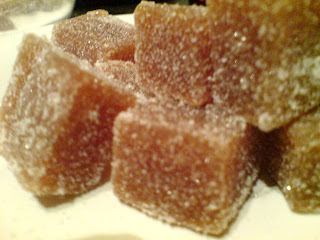
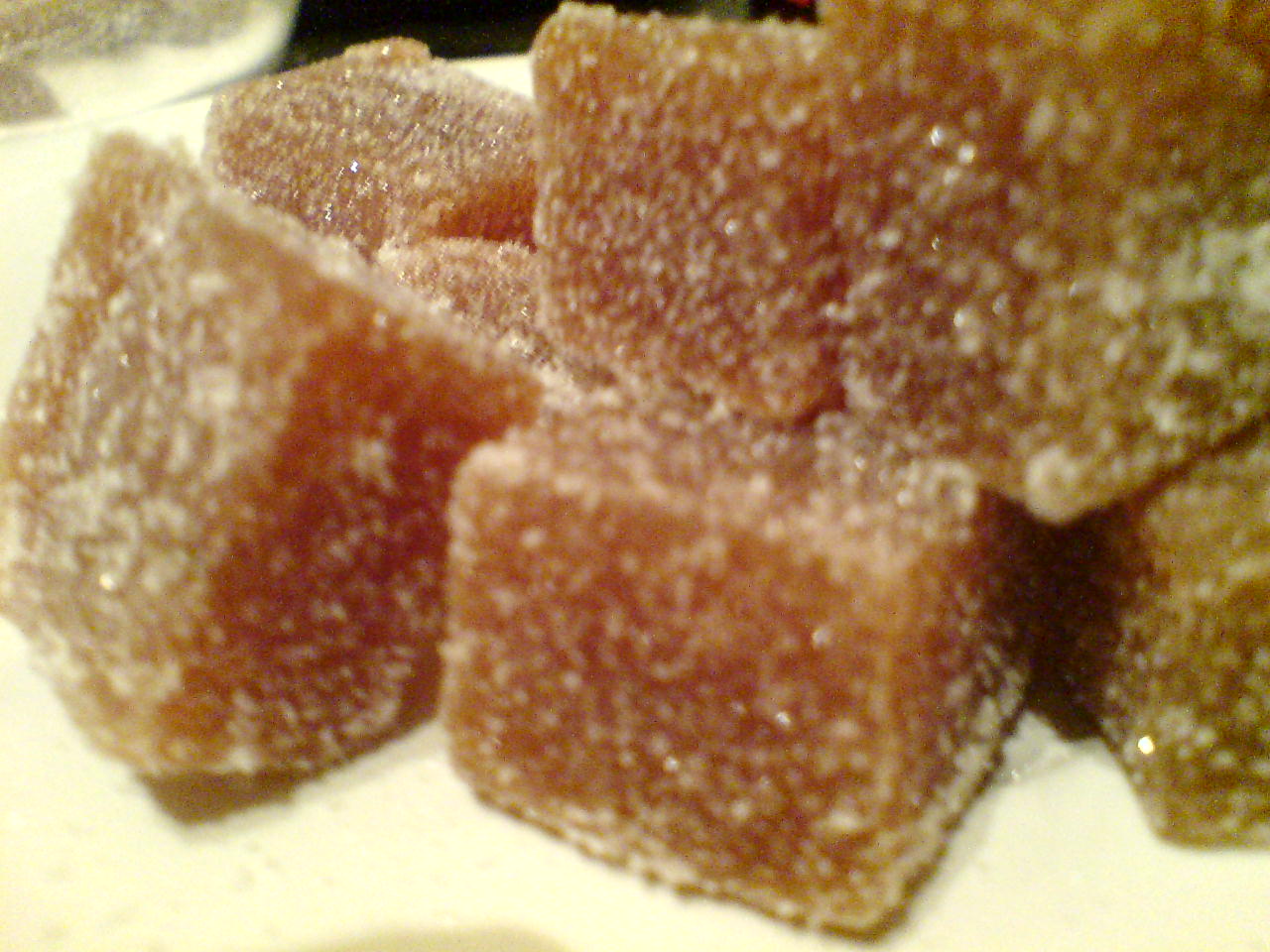
#109 Quince Comfits 

Also, it equipped me with a huge range of skills, because foods were not just being preserved as jams and jellies, but mediaeval comfits, sugars, flavoured spirits, chutneys, candied peel, orangeades and whole fruits. This, in turn, provided me with a backbone to my food business when it first started back in August 2012; I could line up several preserves on my little market stall and if the day was a washout, they would keep for next time.
#294 Preserved Spiced Oranges

Jane’s recipes always fill me with inspiration, and they continue to do so, but her influence here is greatest, because it has given me the most pleasure, which is also the simplest: the pleasure of cooking the recipes themselves.
Some of the recipes are now standards for me. Her (#24) Seville Orange Marmalade is the simplest and best recipe I have used, and her #383 Spiced Redcurrant Jelly too has never been bettered. #397 Herb Jelly is served at almost every roast dinner and is sublime when made with mint and served up with pie and peas.
#315 Cranberry Jelly

Real surprises in this section was the delicious #46 Rich Orangeade, laced with orange flower water has appeared in several of my pop-up restaurants as it makes such good cocktails! I would also urge you to try #385 Apricot and Pineapple Jam, a preserved made from preserves – dried apricots and tinned pineapples. I really didn’t see the point, but the result was delicious!
If you have never made preserves, the recipes in English Food are an excellent place to start.
#354 Passion Fruit Curd

That said, there are some real glaring omissions. There is little by the way of chutneys – there are no pickled onions and how could she leave out glorious piccalilli!? Also, there are no, what I would call, proper jams. Where is the strawberry, apricot, blackcurrant, greengage or raspberry jam? I really have no idea why fresh fruit jams wouldn’t make an appearance at all. I am attempting to fill in recipes that have been missed out on the other blog, so have a look there for more preserves recipes. If you spot something missing, please let me know.
#24 Seville Orange Marmalade

All twenty-one recipes from this section are listed below with a hyperlink to each post and the score I awarded them. It scored a mean mark of 7.5 (or if you’d prefer, a median and mode of 8), making it the third best completed part so far. It scored well most of the time but there was no recipe that achieved a top score of ten out of ten.
#294 Preserved Spiced Oranges (Part I & Part 2) 8.5/10
#127 Banana Chutney 5.5/10
#397 Herb Jellies 8/10
#255 Lemon Curd 8.5/10
#354 Passion Fruit Curd 6.5/10
#109 Quince Comfits 7/10
#20 Quince Vodka (Part 1 and Part 2) 7/10
#36 Vanilla Sugar 7/10
#286 Candied Peel 8/10

Friday, November 8, 2013

#385 Apricot and Pineapple Jam

A recipe from the Preserves part of the final chapter of the book and a recipe that I have been putting off for a good while because it seemed like the most pointless preserve. The two main ingredients, you see, are tinned pineapples and dried apricots WHICH ARE ALREADY PRESERVED! What is the point of that!?

Jane tells us that her mother made this jam during the war, but lost the recipe, but then a stroke of luck; someone sent her a recipe, decades later. And here it is below. I suppose it makes a little bit of sense jazzing up the pineapple and apricots into a jam for high tea at a time of rationing.
The recipe uses not the dried apricots you typically find with the dried fruit in the supermarket, but the kind you find dried whole and rock-hard, with their stones inside. These are readily available at your local Asian grocers.
To begin, you need to soak a pound of the dried apricots in 2 ½ pints of cold water overnight. Take out the stones and crack them open to find the almond-scented kernels within. I find the best way to do this job is to put a dozen or so of the stones in a freezer bag and then swiftly crack them with a hammer. The bag stops the stones from flying everywhere, and a short swift crack with a hammer ensures that – in the main – the stones remain whole.
Put the soaking water along with the apricot flesh in a simmer gently for 30 minutes. Whilst they cook, drain a 12 ounce (375g) tin of pineapple, reserving the juice. Chop the pineapple quite small. Add the juice, the pineapple and kernels to the pan along with 3 pounds of sugar (granulated will do fine) and 4 ounces of blanched, slivered almonds. Bring to a rolling boil until setting point is reached using a sugar thermometer (104⁰C) or by the wrinkle test on a cold saucer.
Let the jam sit for 10 minutes before potting into hot, sterilised jars.
#385 Apricot and Pineapple Jam. This is a great-looking and great-tasting jam. It looks like bejewelled honey with those almonds and kernels floating in there. It doesn’t taste as sweet as I thought it would, and is delicious on toast or in jam tarts. It seems that, although the ingredients did not need further preservation, a jam was created that was greater than the sum of their parts. All art is useless, as Oscar Wilde said. Very good: 8/10.
 

Sunday, January 20, 2013

#367 Hot Red Pepper Jelly


Chilli peppers and sweet bell peppers have never really been absorbed into our eating culture. I cannot think of a single English (or indeed British) dish that uses it. You do find some sliced red pepper on a salad, but that’s about it. When Portuguese and Spanish explorers brought them back from their travels to the New World, many of the Southern European and Northern African countries quickly assimilated it into their cooking. Of course, peppers are most successful in Asia. Who can imagine an Thai, Indian or Pakistani curry without it?
Whenever I cook with peppers – sweet or hot – it is always in a curry or an Italian pasta sauce. Well with this recipe I think that Jane Grigson is trying to use peppers in a very English way. In fact it comes from her daughter Sophie Grigson, now a very successful food writer in her own right. I think it is a very British preserve; a clear sweet jelly cut with a bit of vinegar to make it certainly savoury.


Halve and core 2 pounds of cooking apples such as Bramleys seedling, but don’t chuck out the cores (they are a valuable source of pectin). Chop the flesh and blitz in a food processor. Tip them into a preserving pan or stockpot with the reserved cores. Tip in 15 fluid ounces of cider vinegar to prevent the apples from discolouring. Next, deseed and roughly chop 3 red peppers and 4 red chilli peppers. Blitz those up too and add to the pot. 


Bring to a boil and simmer for a good 20 minutes. At this point there will be an absolutely delicious smell. Savour it – the smell from this aromatic sharp concoction is wonderful! Strain the hot mixture through a jelly bag and allow it to drip overnight.


Next day, measure the volume of juice you have and pour it into you pan. Stir in granulated sugar – you’ll need a pound for every pint of juice. Once the sugar has dissolved, turn up the heat and boil for 20 minutes.
Normally, the apples alone have enough pectin in them to easily set a jelly like this, but the chilli peppers somehow interact with the pectin and prevent it from happening. To get around this problem you need to add extra pectin which comes in the form of a viscous liquid or a powder. Grigson suggests using 3 fluid ounces of liquid pectin (e.g. Certo), but you could use a sachet of pectin powder in its place. Whichever you use, mix it well into the boiling jelly. Test for a set using a thermometer; 104⁰C is what you are looking for. This will take about 10 or 15 minutes of hard boiling. It is important to note that you shouldn’t follow the instructions on the packet. Pot the jelly into sterilised jars.

#367 Hot Red Pepper Jelly. This was very refreshing and delicious – the sweet jelly combined with sharp vinegar is a great one that really brought out chilli flavour as well as chilli heat. It was very good with cheese. 8.5/10

Tuesday, April 28, 2009

#139 Bakewell Pudding

As I’ve mentioned previously, I’ve got quite a lot on at the minute – the main ball-ache being that I’ve been in work almost everyday over the last few weeks including weekends. Therefore, on Saturday after a big lab sesh, I really felt the need to do some baking, so for pudding on Saturday evening I plumped for the Bakewell Pudding. Don’t be getting this confused with a Bakewell tart – they are similar, but with important differences: Bakewell tarts have a pastry base, a thin layer of cherry jam, frangipane, and then a covering of icing with a cherry on top. A Bakewell pudding, pastry, raspberry jam, then a layer of egg custard mixed with ground almonds (in fact, in days of yore, there would have been no almonds at all, so the emphasis is definitely on the egg custard). These may not seem like important differences, and they are not, but just pointing them out for any pernickety people out there who like their factoids.

Anyways, have a go at this pudding – serve it warm or cold. Griggers doesn’t mention cream when serving it or anything like that, but I can’t imagine it would do any harm!

Start by making a sweet shortcrust pastry – I made mine from 6 ounces of plain flour, 2 ounces of icing sugar, 4 ounces of butter and a little milk. Griggers says to line an 8 inch tart tin with the pastry, but I found that there was mixture left over, so make it in a 9 inch tin if you have one – alternatively make additional mini ones as I did! Once lined, spread over a thin layer of raspberry jam – not too much, a good dessert spoonful will do it.

Now make the main filling: gently melt 4 ounces of unsalted butter in a pan and leave to cool. Then beat or whisk together 4 eggs with 4 ounces of caster sugar until creamy and frothed up (use an electric whisk/beater, unless you like doing it by hand). Slowly pour in the butter and mix gently before folding in 4 ounces of ground almonds with a metal spoon. Pour the mixture into the case and bake for 30-40 minutes, or until the filling has set, at 200-220⁰C.


#139 Bakewell Pudding – 7/10. A real homely comforting pudding/tart, very sweet and moist. It reminded me of the cakes my mum used to make when I was little – I think hers was coconut rather than almonds, but the effect is pretty much the same. Really nice with a cup of tea or a glass of milk.

Saturday, March 14, 2009

#126 Kickshaws

As we are being constantly reminded of Global Recessions and Credit Crunches in the news, I thought it’s best to get as thrifty as possible and make some meals out of leftovers. I’ve managed to get two extra things out of the feast I made – one of which is a recipe from English Food, the other one of my own devising.

I made the Kickshaws from the leftover puff pastry trimmings. They are very easy to make – good one to make with kids if you’ve got any and don’t mind getting their filthy little paws in you food.

Roll out your puff pastry trimmings thinly and cut out circles of around 3 inches in diameter. Next, place a scant teaspoon of jelly or jam in the centre and use milk or beaten egg to make little parcels or turnovers; I used bramble jelly, quince jelly and apricot jam. Deep fry at around 160°C for a few minutes until the pastry has puffed up and golden brown. Sprinkle some sugar over them and eat warm. I poured some double cream over them that was also left over from big feast.

FYI: the name “Kickshaws” comes from an Anglicisation of the French quelque chose. I don’t know any French, but Griggers says it means “some odd thing or other”.

#126 Kickshaws – 8/10. Kickshaws go right back to Medieval times, though survived until the Eighteenth Century, though we don’t really make them now. We should definitely bring them back though as they are delicious. They are definitely being made every time there are trimmings to be used up!