Friday, October 7, 2016
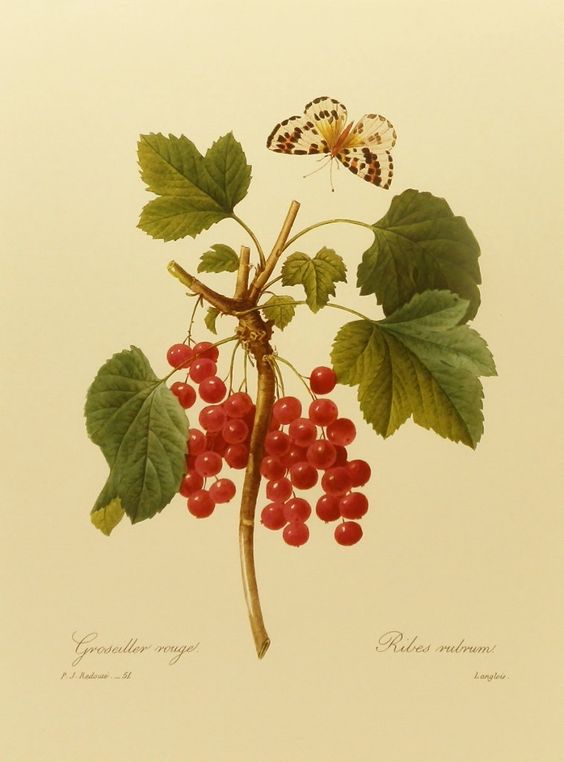
#422 Peppered Redcurrant Jelly
Monday, September 28, 2015
#414 Oldbury Gooseberry Tarts
At this point, I kneaded the dough until smooth – Jane says it should have ‘a waxy look’ – then popped it back in the bowl, covered it with cling film and left it to rest for a bit until it felt like it could be rolled and moulded successfully.
Now you can tumble in your topped and tailed gooseberries (about 8 ounces altogether) and a good amount of Demerara sugar (at least an ounce per tart, I’d say, but use your discretion). Roll out the lids, make a hole in the centre, and glue them in place with a brush and water, making sure you crimp the edges. Now leave the pastry to harden, this is a matter of a couple of hours in the fridge, but if leaving them in a cool larder, it’ll require an overnight wait.
Bake the ‘tarts’ for around 25-30 minutes at 200⁰C. Because of a lack of either egg , icing sugar or glaze, the pastry doesn’t turn a nice golden brown, but if the filling is happily bubbling away within, you can be pretty sure they are ready.
I served them warm with some pouring cream.
Monday, September 16, 2013
#383 Spiced Redcurrant Jelly
Tuesday, August 6, 2013
#381 Baked Gooseberry Pudding
Tuesday, July 30, 2013
#380 Gooseberry Sauce for Mackerel
Friday, September 21, 2012
#354 Passion Fruit Curd
Tuesday, June 7, 2011
#297 Raspberry Pie
The tale of this pie is of personal pain and anguish. Let me tell you the tale…
It was my work-buddy Chandra's PhD thesis defence yesterday and she requested that I made this pie rather a cake for when she came out. Great stuff, thought I, any excuse to make something out of the book, plus the raspberry is my favourite fruit so it has got to be a winner. This pie is an eighteenth century pie and requires the fruit to be cooked in the pastry casing and then in the last five minutes, a custard to be poured in through the hole in the pastry. This was the usual way to make a fruity pie in those days, apparently. Anyway, Griggers says to serve it hot or warm, so I nipped back to my apartment to make it. I popped the pie into the oven and got the custard – or caudle as it was called then – ready.
Unfortunately the raspberries were so juicy that there was no room for any caudle, so I ran over the road and bought some straws from the shop with the inspired idea that I would suck the spare juice out. Hoping the pie had cooled slightly I attempted to suck some out – I think because time was becoming an issue I didn't notice the fact that this was 170°C fruit syrup too much, but then as I realized just how much syrup there was, my nervous system kicked in. Cue much wincing and swearing. After about 15 minutes of this, I had finally cleared enough space to pour the caudle in. Mouth pretty sore, but not major damage done. Popped the pie back in the over for its final five minutes and rushed it back to Rice University. It was only whilst driving down towards work that I noticed the skin of the roof of mouth sloughing off and dangling upon my red raw tongue. She had better bloody like this pie. Luckily it went down well. On returning home later that evening, I rinsed my mouth out with Listerine before bed. More agony. Then, in the morning, I thought I would clean my tongue as well as my teeth as it was burnt and may have had some nasty bacteria there trying to infect the poor thing. Bad idea. I left for work with bleeding tongue. Hopefully it won't go gangrenous and I won't have to have my face removed.
To make the pie, you need to start with the pastry. In the eighteenth century, puff pastry will have been used, but Griggers goes for the sweet rich shortcrust and gives an ingredients list for it. Sieve 12 ounces of plain flour along with 2 tablespoons of icing sugar and a pinch of salt into a large bowl. Next, add 8 ounces of cubed butter or a combination of butter and lard. Use a mixer or food processor, to rub the butter into the flour. If you like to keep it real, use your hands or one of those pastry cutters as I did. The important thing is to keep everything as cold as possible – use butter straight out of the fridge and turn that A/C as low as you can! Once the butter is rubbed in, add an egg yolk (keep the white) and two or three tablespoons of ice-cold water, enough to bring everything to a dough. Don't worry if you add too much, you can add some more flour. Knead the dough briefly and then pop it in the fridge to rest and firm up again.
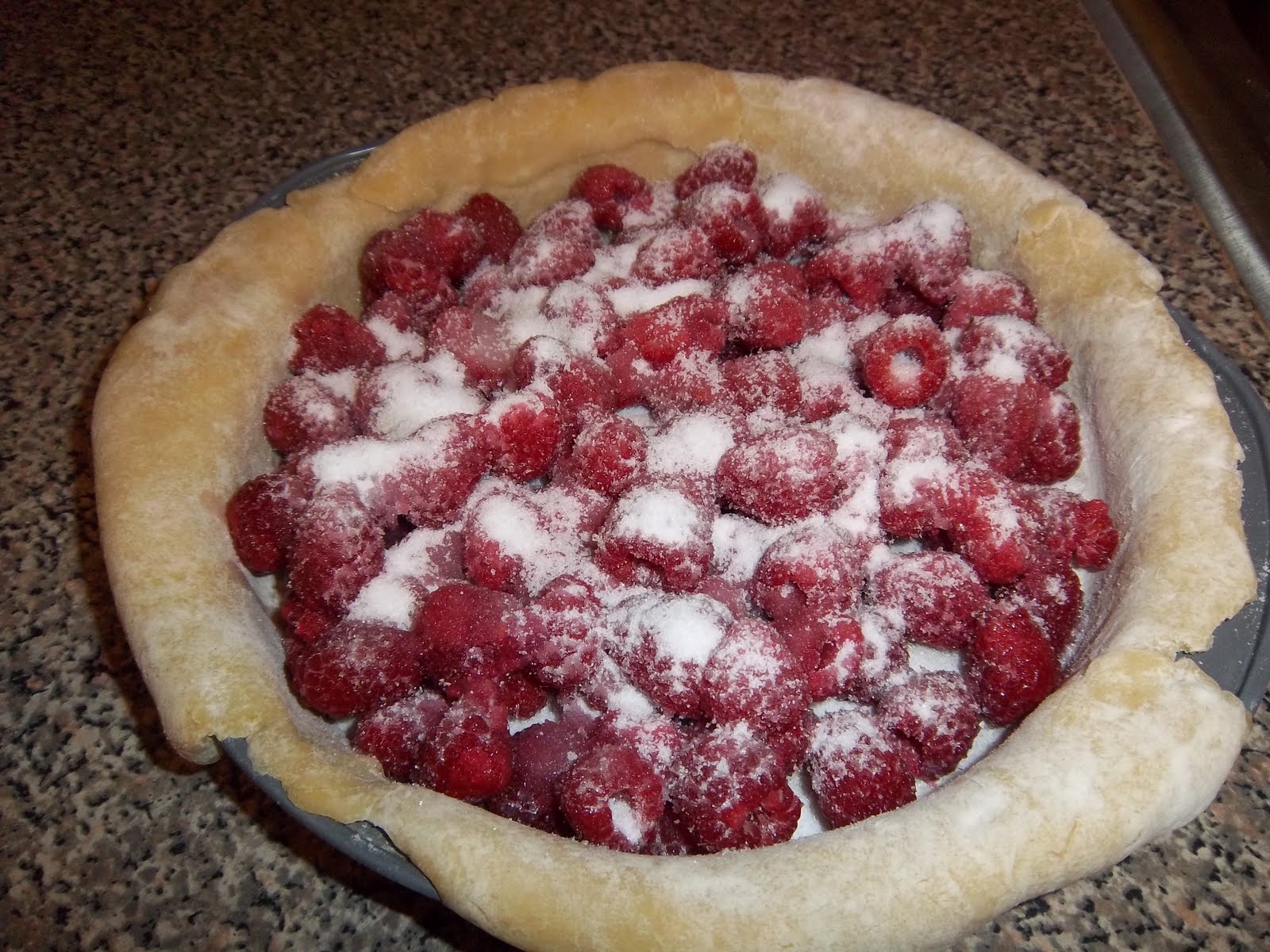
Preheat your oven to 190°C (425°F) and place a baking sheet on one of the shelves. Now roll out two-thirds of your dough and line your pie dish with it. If it is warm in the kitchen, roll it out on some cling film, this will stop it from breaking up. A top tip for you there. The dish needs to be 2 to 3 inches deep, Griggers doesn't mention a diameter, but I went with an eight inch diameter one. Now arrange a pound of raspberries in a layer in the pie and sprinkle over 4 ounces of sugar (or less, if the raspberries are particularly sweet).
Roll out the remainder of the pastry to form a lid, gluing it on with a brushing of the reserved egg white. Trim the edges and decorate if you wish – I went with a mortar board motif, seeing as it was a PhD defence. Brush with more egg white and sprinkle with sugar. Make sure you leave a good-sized hole in the centre. Place in the oven on the hot baking tray and bake for 15 minutes before turning down the heat to 190°C (375°F). The point of the hot baking tray is so that the pastry bottom crisps up before the raspberries give up their juice, preventing a soggy pastry bottom to the pie. The pie should be cooked until the pastry is nicely browned and crisp, around 40 minutes.
Whilst it is cooking, prepare the caudle: bring 4 fluid ounces of single and 4 of double cream to a boil in a saucepan. As soon as boiling point is reached pour them over two egg yolks, whisking vigorously to prevent making scrambled eggs. In the final 5 minutes of cooking, take the pie out of the oven and slowly pour the caudle into the pie using a funnel and return to the oven so the caudle can thicken. Serve hot or warm. Oh, she makes it sound so easy. Looking back, it would have been better to pile the raspberries in the middle slightly so when it collapsed there would have been some space for the caudle. It was also suggested that instead of using a straw, I should have used a baster or a pipette or something. Retrospect is a wonderful thing.
#297 Raspberry Pie. Ah, the raspberry. There is nothing better than stumbling across some wild raspberries when walking in the woods. The pie itself was reminiscent of the French clafoutis, where fruit is cooked in custard in a pastry case, though without the lid. I love raspberries, I love custard and I love pastry, so this could not have been a disappointment. I have to say it was delicious, even though I my taste-buds were not working at their best at the time. The caudle had thickened up and mixed with the juice, and it wasn't overly sweet either. Jane says that you can use any soft fruit for this pie – gooseberries work particularly well apparently – so I shall be definitely this again whenever there is a glut of soft fruits. Though without the second-degree burns this time. 8.5/10.
Monday, August 30, 2010
#249 Isle of Wight Pudding
Back in England it is blackberry season and those brambles that are so annoying and prickly for the rest of the year finally earn their keep. This recipe uses them, and so it was a great chance to try something that isn’t blackberry and apple pie (nice though it is). I made this in Derby visiting Simon and Rachel and the farm they are trying to set up as a cooperative eventually. They also keep bees and I used some of their delicious honey for this recipe too. If it isn’t blackberry season any soft fruit will do.
First make a shortcrust pastry with 8 ounces of flour and 4 of fat (butter, lard, or a mixture) plus cold water and roll it out into an oblong shape. Spread 4 fluid ounces of runny honey over the pastry and then sprinkle 8 ounces of blackberries over it. Roll up the dough so that it makes a sort-of Swiss roll, tucking the pastry under at the edges. Place in a small ovenproof dish and pour over 4 fluid ounces of single cream. Bake at 200⁰C for 45 minutes. Serve with thick cream.
#249 Isle of Wight Pudding. A really good pud this one, and cheap too! The best thing about it was that the juices from the berries plus the honey and cream heat up to form a delicious toffee sauce. The top goes very dark and forms a good crust, though it doesn't make the dessert look very pretty. Give it a go – quick and simple. 7/10
Thursday, July 15, 2010
#245 Coconut Cream with Strawberry Sauce
It’s a little bit of a faff this one and the coconut cream needs to be made well in advance because it contains gelatine and that needs to set. To make it, bring ¼ pint of single and soured cream slowly to a boil along with a split vanilla pod and 4 ounces of desiccated coconut and 7 fluid ounces of water. Let the mixture simmer for 10 minutes and let it cool down until ‘tepid’. Pass through a sieve and add either powdered or leaf gelatine dissolved in 6 tablespoons of water; follow the instructions in the packet and make enough for a pint of liquid in total. Also add a good tablespoon of grated creamed coconut and add sugar and lime juice to taste. Griggers says: “the citrus juice is an enhancer, it should not be identifiable”. Pop the cream in the fridge and allow to cool and reach an ‘egg white consistency’. At this point, fold in ½ pint of whipping cream that had been whipped stiffly. Pour the whole mixture into a lightly-oiled decorative jelly mould and allow to set. To turn it out, dip the mould in hot water briefly before upturning it.
#245 Coconut Cream with Strawberry Sauce. Oh, I had looked forward to this one for so long; I should have learned by now that some of these desserts are just plain rubbish. And this one definitely fits into that category. The coconut cream was pretty tasteless bearing in mind the number of what should be delicious ingredients that made it up. Next time, strawberries and cream will be served. 3/10.
Wednesday, January 27, 2010
#221 Cherry Tarts
Cherry season is pretty much a non-event in Britain these days, unless you live in cherry country – Kent. Almost all the cherries sold in markets and supermarkets are imported and finding home-grown cherries is nigh-on impossible. I certainly could find any here in Manchester.
Cherries have been enjoyed since the times of Ancient Greece, where they were considered only really worth eating raw, where they served as diuretic. In fact there is a detox diet that requires the poor dieter to put away a kilo of cherries a day; I like cherries, but not that much. Cherries did not become popular during – and therefore were only cultivated from – the Middle Ages. It was then that the cherry harvest became a part of European festival and a symbol of all that is good in summertime. Luckily in the day of the domestic deep freeze, we can save our cherries and enjoy them whenever we like, though they best eaten or cooked fresh really.
Anyways, that’s enough schpiel! Try these dainty little cherry tarts – they are essentially mini-clafoutis with a pastry base.
Start by making some sweet shortcrust pastry by rubbing three ounces of flour into five ounces of plain flour and two tablespoons of icing sugar. Bring the dough together with a large egg yolk and a tablespoon of lemon juice. If it is still a little dry, then add some cold water or milk. Allow to rest for at least 30 minutes in the fridge. Meanwhile, stone around a pound and a half cherries. Roll out the pastry thinly – as sweet pastry is very soft, it is worth rolling it out on some cling film of greaseproof paper – cut out 18 circles to line some small tart tins. Place a closely-packed layer of cherries in each little tart and then make the sweetened custard filling: whisk together a quarter of a pint of double cream, two eggs and three ounces of caster sugar. Pour a scant tablespoon of each of the cherry tarts and then bake for 15-20 minutes at 230⁰C until the custard browns and is set. Eat hot or warm.
#221 Cherry Tarts. A good and simple dessert to make, though the frozen cherries were perhaps not as good as fresh ones. Maybe the best to use would be morellos. Mine were a little insipid. That said you can’t go far wrong with the sweet pastry and custard elements to this pud. I’m sure you could use any fruit. I bet some lightly-stewed rhubarb pieces would be delicious. 5.5/10, though with good cherries, it would have been at least an 8/10, I reckon.
Monday, August 17, 2009
#179 Fruit Salad with Tea
You can any fruit you like and in any quantity, though it is best to stick to dark and red soft fruits. I stuck to what Jane suggests: 1 lb purple plums, stoned and chopped; 1 lb black cherries, stoned; ½ lb black grapes, halved; ½ lb strawberries, halved (or sliced if they are large) and 4 ounces of raspberries. Arrange the fruit in a glass bowl in layers, using sliced strawberries to line the bowl, and sprinkling sugar as you go. Cover and leave overnight. Next day, make a double strength brew of Earl Grey or orange pekoe tea and leave to cool. Pour it onto the bowl so that it almost comes to the top. Taste the tea and add more sugar if necessary. Decorate with mint leaves. There is no need to serve it with anything at all.
#179 Fruit Salad with Tea. Really, really good! A complete surprise and a taste sensation. The tea was light, sweet and delicious, and Jonty and Butters didn’t guess that there was tea in there. The fruit had gone soft and juicy, looking like little jewels. I didn’t think a fruit salad could be so good! I shall never make a fruit salad any other way again. 8/10
FYI: The Earl Grey referred to in Earl Grey tea is the second Earl Grey, who was a Prime Minister in the 1830s. He was sent some tea flavoured with bergamot oil as a gift from China, and so it was forever named after him
Thursday, July 30, 2009
#173 Summer Pudding
Make this pudding whilst there is a glut of summer berries that are in season and therefore won’t cost a fortune. (The original recipe is for a huge one that serves eight to ten people, but I halved all the ingredients).
Place a pound of summer berries in a bowl with 4 ounces of caster sugar. Grigson says to use blackcurrants, or a mixture of raspberries, redcurrants and blackberries. The truth is, you can use whatever you want – chopped strawberries are a common addition, for example. Stir, cover and leave overnight. Add the fruit and the juices to a saucepan and bring to a boil and simmer for two minutes to lightly cook the fruit. Next, prepare the pudding basin – you’ll need a 2 ½ pint one for this amount of fruit. Cut a circle of slightly stale white bread for the bottom of the bowl, and then cut wide strips for the edges which should overlap as you place them inside the mould to produce a strong wall with no leaks – make sure you remove the crusts!. Once they are all arranged, pour in half the berry mixture, then add a slice of bread, then the rest of the mixture. Cut more bread make a lid and then fold over or trim any surplus bits. Put a plate on top and weight it down with a couple of food cans and place in the fridge overnight. Turn the pudding out onto a plate and serve with plenty of cream. (Grigson suggests making some extra berry sauce to cover any bread that has not become soaked, though you can get around this by dipping te bread in the berry juices before you place them in the pudding basin.)
#173 Summer Pudding – 9.5/10. It is jostling with Sussex Pond Pudding for first place in the pudding stakes for me. What is there not to like about a big load of tart berries and a dollop of cream? Anyone squeamish about the soggy bread really needn’t be – it is an English classic and everyone should try it (if not this one, then the Sussex Pond Pudding!).