Monday, July 4, 2011

#301 Yorkshire Curd Tart


Hello there! I'm still not up and running in St Louis with blog recipes just yet as I am still getting the apartment sorted and using spare time to explore this amazing city. However, rain has stopped play for Dr Buttery and there is a raging thunderstorm happening outside so this is the perfect opportunity to fill you in on the final recipe I made in Houston.

When I was packing up my stuff in the old apartment I noticed I had all the ingredients for a Yorkshire curd tart just lying about, so I thought I'd conjure one up to take into work for us all to eat whilst we were packing up the laboratory, which also had to move from Texas to Missouri as well as us. I reckoned it would go down well as it is essentially a sort of cheesecake, and cheesecakes are loved all across America. I find it strange that the English too love cheesecake, and yet ignore the ones that come from their own country. We are such weirdoes.

Nobody had heard of this tart at work, but that is no surprise, as most people outside of Yorkshire haven't heard of it either which I think of strange as it is my favourite sweet tart of all time. I had never made one however, as it is very difficult to get your hands on curd cheese these days – and cottage cheese or cream cheese WILL NOT DO, says Griggers. Luckily I had some essence of rennet that I used many moons ago to make the Devonshire junket. I had brought it back with me on my last visit to England at Eastertime. Always thinking, is I.

Woman Milking a Cow by Karel Dujardin

Anyways, if you are to make a proper curd tart, you need to make your curds from the freshly calved mother cow's first milk – called colostrum – which is extra-creamy. Unless you have your own cows, this isn't really practical, so to emulate this use Jersey milk. What I did was use normal whole milk and mixed it with some of the half-and-half I had left over from making the trifle. (Brits: half-and-half is the closest to single cream I can find). Also, proper curd tart should be spiced with allspice (called pimento, I think, in the USA). Here's a little quote that Griggers uses in her introduction to the recipe, though she doesn't source it:

'In this part of Yorkshire, what is called "clove pepper" and known to the southerners as "all-spice" is still largely used to flavour cheesecakes.'

To make the curds, warm the milk and creams, if using, in a pan to 37°C (97°F).


I used around two pints to get just over eight ounces of curds. Take off the heat. Follow the instructions on your rennet and add the appropriate amount to the milk. You can also add a couple of tablespoons of buttermilk too if you have some, though it is not necessary. Leave the curds to develop for a few hours and when they have set pour the lot into some double-layered muslin (cheesecloth), or you could use a clean pillowcase too (as I did). Allow to drip overnight at room temperature. If things are a little blocked up, give the whole thing a stir and a scrape with a plastic spatula.


The curds should also take on a pleasing fresh, mild cheesy smell. Once it is properly drained, put the curds in a dish and refrigerate.


Now you have made the curds, you can make the tart filling…
First of all line an 8-10 inch tart tin with shortcrust pastry. Next cream together 4 ounces of butter and 2 ounces of sugar in a bowl before stirring in 8 ounces of your curd cheese, 4 ounces of raisins or currants, a rounded tablespoon of wholemeal breadcrumbs, a pinch of salt, two beaten eggs and a good amount of allspice or nutmeg. Pour this into your pastry case and bake in the oven at 220°C (425°F) for 20 to 30 minutes. Easy!


#301 Yorkshire Curd Tart. This transported me straight back to Yorkshire and my childhood! This recipe is amazing, and I am so glad I made it. I wonder why it took me so long to get around to making it? The centre was moist and sweetened by the dried fruit rather than copious sugar. It is the "clove-pepper" that is the secret ingredient of course; be bold with it, you need at least a good half-teaspoon. A delicious tart that is going into my repertoire! 9.5/10.

Saturday, July 2, 2011

Thank You!

Just a quick message to say thanks to everyone who looks at the blog – I had a record number of viewings in June. I'm going to be back doing the blog very soon once I am settled in Saint Louis; the move from Houston has been total chaos. I promise I'll be adding some posts in the coming week or two….

Laters!

Wednesday, June 22, 2011

#300 Trifle

Trifle (ˈtraɪf(ə)l), n.: A matter of little value or importance; 'a thing of no moment' (Johnson); a trivial, paltry, or insignificant affair.
                                                         Oxford English Dictionary

Dr Samuel Johnson: Trifle hater 
(but then he was a grumpy old bastard and did hate everything) 

Trifles make perfection, and perfection is no trifle         
                                                         Michelangelo

Michelangelo: Trifle appreciator

Is there nothing more English and impressive than a properly made trifle? I don't think so. Indeed, it is the reason I have saved it for the landmark 300th recipe. Although its original meaning is one of 'little value or importance', the trifles upon the Georgian, Victorian and Edwardian banquet table had gained a great opulence becoming a splendid centerpiece lavishly layered up with brandies, sherries, wines, custard, cream, macaroons, cake, syllabub and cream, not to mention the candied fruits and comfits to decorate the top. Mrs Beeton shows off some of them in her Book of Household Management so that other cooks could emulate them in stately homes across England.

A plate from Mrs Beeton's Book of Houshold Management,
the trifle is on the bottom left

The trifle did start out from humble beginnings and was simply a fruit fool made up of puréed fruit and whipped cream. The earliest mention of the word trifle in the sense of a dessert, according to the Oxford English Dictionary, comes from the book A worlde of wordes, or most copious, and exact dictionarie in Italian and English by John Florio published in 1598. However, as the dessert became a vehicle for shrewd cooks to use up left over biscuits and cakes, it quickly evolved into a more complex dish altogether.

So what makes a trifle? By the mid-eighteenth century, it had pretty much become the layered beast we know of today, though there was no fruit involved. It was made of macaroons soaked in wine followed by a layer of custard atopped by a syllabub and 'different coloured sweetmeats and small shot comfits…figures and flowers', according to Elizabeth Raffauld's 1769 book, The Experienced English Housekeeper. Trifle purists today insist that this sort of trifle is the classic recipe and if a trifle were to contain fruit and – heaven forbid! – no alcohol then it is simply not a trifle.

By the early nineteenth century, there were many more additions – spiced cake and fruit jams and jellies for instance, often cream was exchanged for syllabub.

Then, in the twentieth century, the trifle had its downfall. Here is what Jane Grigson says about the pud:
'A pudding worth eating, not the mean travesty made with yellow, packaged sponge cakes, poor sherry and powdered custards.'

That is her entire introduction to the recipe! I have to say I used to love (and still do love) my Mum's trifle; a layer of tinned fruit, Swiss roll and jelly, with powdered custard and then whipped cream. I remember once trying a 'proper', i.e. sherry, trifle and it was simply disgusting. I hoped that the trifle in here would both look and taste impressive, but all I could think of was that vile sherry trifle and the stomach-churningly rich Whim-Wham I made a couple of years back for the blog.

So, with a certain amount of trepidation, I started to construct this pudding worth eating. Hopefully everyone who was coming round to my apartment would also think it worth eating too...

The first thing you need to do before you even consider making your trifle is to get hold of a nice bowl or dish to hold it in. I went for a classic stemmed glass trifle dish, nice and big and only $15. Bargain.
Now for the trifle itself: Start off by placing eight or so large macaroons in the base of your bowl. Break up some to fill in any gaps that may be there. By macaroons, I don't mean coconut, but the old fashioned almond, or French, macaroons. These are quite tricky to get hold of and you won't find them in a supermarket or even most bakeries. The best thing to do is phone around some French bakeries, or do as I did and keep it real by actually make your own. I took elements from an eighteenth century recipe by Elizabeth Raffauld and a contemporary one by Martha Stewart (see it here). Next, pour ¼ of a pint of a good dessert wine over them; Griggers suggests Frontignan, Malaga or Madeira wine. I went with Frontignan – not tricky to get hold hold of, but does more often go under the pseudonym of Muscat wine. Along with the wine, add two tablespoons of brandy.


Next make the custard by boiling a pint of single cream in a saucepan (any Americans out there, use coffee cream or half and half). Whilst you wait for it come to a boil, whisk together two large eggs, two large egg yolks and tablespoon of plain flour in a bowl. When the cream comes to a boil, tip it over the eggs whisking vigorously as you go, then pour it back into your saucepan and stir over a low heat for a few minutes until it becomes nice and thick. Add sugar to taste – I went with around three tablespoons in the end. Remember to make it slightly sweeter than you prefer as cold food will not taste quite as sweet as hot. Pour the custard over the soaked macaroons and allow to cool. In fact it is best to leave it over night.

Don't be thinking that there is time for idling though, for there is a syllabub to conjure up! The syllabub recipe has already appeared in the blog before so I won't go through it here. Check out the recipe here and use the same wines as before to make it. Note that the syllabub requires an overnight steep as part of its prep.


When the custard has firmed up, spread a good layer of raspberry jam over it and then spoon over the Everlasting Syllabub. Lastly, decorate with ratafia biscuits and some sweetmeats such as candied peel and comfits. Jane says to avoid tacky things like angelica and glace cherries, but I went with those nice cherries in syrup that are stones but have their stalks intact.


Leave the trifle somewhere cool for a while – a larder or pantry is better than a fridge, but in Houston, the refrigerator is the only option!

Groan!

#300 Trifle. Three hundred recipes also means I am two-thirds of the way through English Food and what a recipe to choose! It took a good amount of time to make, but it was so, so worth it. The sweet wines blended perfectly with the light, fresh creams and custards in such a wonderful way, and the almond biscuits on the top and bottom layers gave it a nutty, scented quality and the sweet raspberry jam lent a subtle fruitiness. There was no hint of alcoholic acridity like I expected. In fact I had two helpings and then when everyone had left, I polished the rest off! Excellent, excellent, excellent. And worth eating! 10/10.


Don't I look pleased with myself!?


Sunday, June 19, 2011

#299 Leg of Lamb Stuffed with Crab


For the 300th recipe I got a few people round to mine for a little dinner party. Number 300 would hopefully be impressive and I wanted to do something for #299 that would be impressive too and this recipe certainly sounded the part. I also wanted something that dated in the eighteenth or nineteenth centuries, again to match receipt 300.

A recipe for a leg of lamb stuffed with 'a forcemeat containing the meat of a crab or lobster … [with] a little grated lemon peel, and nutmeg', appeared in The London Art of Cookery by John Farley (1811), so it has a decent history, though this kind of food has very much fallen out favour in England. However, one particular chef gave it a breath of new life in the 1970s. A chap called Guy Mouilleron came up with the recipe that appears in English Food and therefore here in the blog, after some French chefs who were working in London were having a right good-old laugh at the English's eating habits. "Fancy" one of them said "they even eat lamb with crab!" Chef Mouilleron thought it sounded like a good idea and conjured up a recipe. It's funny that every British (and Irish!) person I've spoken to about this recipe has thought it just a bizarre as those French chefs.

There's no need to be freaked by this combination though, says Jane, meat was often 'piqued' with fish all the time to give it extra flavour; the idea is not to impart a fishy flavour though, but a mysterious deliciousness. This is true as I already knew after one the great recipes from the blog – steak, kidney and oyster pudding. Meats are also cooked with anchovies a lot too, especially lamb and that cornerstone of English cuisine, the Melton Mowbray pork pie. It seems these things are being lost because of the Englishman's squeamishness of all things fishy in general.

It is strange to me that Americans – or, at least, Houstonians – don't really eat that much lamb and getting hold of a full, large leg of lamb with the bone in isn't really possible in Houston's otherwise comprehensive supermarket meat sections. However, I did manage to get hold of one very easily from the very good Pete's Fine Meats on Richmond Avenue.

Pete's Fine Meats, Houston TX

The recipe also calls for crab meat of course. You can boil your own (see here for instructions) or buy one preboiled. Do not, says Griggers, buy frozen meat as it had lost most of its flavour. However, here in America, where folks like seafood, it is very easy to get hold of freshly picked crab meat in supermarkets, so if you are in the USA, there is no need for you to sit and spend thirty minutes picking the meat from a crab's carapace. God bless America for making the recipe a little easier for yours truly.

If you fancy the idea of this combination, here's how to make it:

Start off by tunnel-boning a large leg of lamb. This is not that difficult to do – I followed the instructions here and it took just five or ten minutes to do. Use the bones to make half a pint of lamb stock (see here for recipe). Season the inside and outside of your leg.


Next, make the stuffing. You need eight to ten ounces of crab meat; either buy it fresh if you can or get hold of a crab weighing around one-and-a-half pounds. To the crab meat, mix in half a teaspoon of curry powder, a tablespoon of fresh mint and three egg yolks. Season with salt and pepper. Stuff the cavity with the crab and sew up the lamb at both ends with a stout needle and some thick thread. All this can be done in advance, of course.


Preheat your oven to 180°C (350°F). Chop equal amounts of onions and carrots, enough to cover the bottom of a roasting tin, as well as a large celery stick. Season well and place the lamb on top. Cover with a double layer of foil (if you have a self-basting tin, you can use that instead) and roast in the oven for two hours. Take the roasting tin out of the oven and place the lamb on another tin and put back in the oven to crisp up.

For the accompanying sauce, put the tin with the vegetables on the hob and bring to a simmer, cooking for five minutes. Now add the lamb stock and half a pint of dry white wine. Make sure you scrape off any of the burnt bits from the surface of the roasting tin. They are the best bits. Strain the sauce into a saucepan, skim away any fat and then stir in a quarter of a pint of double cream and a teaspoon of curry powder.
Place the meat on a large serving dish (don't forget to take out its stitches!) and surround it by buttered noodles and pour the sauce into a sauce boat. Griggers didn't say what vegetables to serve with it, so I served green beans, my own personal favourite lamb accompaniment.


#299 Leg of Lamb Stuffed with Crab. Well I wanted something that looked impressive and it this definitely looked the part. The meat was very good as was the minty and fresh tasting stuffing, though the sauce was a little bland. It wasn't bad or anything, it just didn't pack the punch that I expected it to. If I were to cook it again, I would simmer that sauce right so it became concentrated before adding the cream and curry powder. My expectations were also raised because the lamb section of the book has been so very good thus far. That said, roast lamb can never be bad in my opinion, so I give it a 7/10.

Saturday, June 18, 2011

A Lamb Stock Recipe

Tomorrow I cook the 300th blog recipe – a dessert, but for #299 I am going to do a lamb dish which requires lamb stock. You don't see lamb stock cubes in the USA very much so you can't cheat if you need it for a recipe so I thought this might come in useful for anyone who may need it. It is adapted slightly from the book a Celebration of Soup by Lindsey Bareham. Unless Jane Grigson gives a specific recipe for stock, I always turn to this book to give me a helping hand.

Start with getting around a pound to a pound-and-a-half of lamb bones – I used the bones from the leg of lamb I am using for recipe #299 (I shan't tell you what it is yet). The bones need to be broken in half at least, so wrap any in a teatowel and give them a good whack with a hammer until there is a snap. Put the bones in a roasting tin and place in a hot oven – around 200° (400°F) for around twenty minutes. Place the bones in your stock pot, drain off any fat and deglaze the roasting tin with half a pint of water. Pour the water in the pot and add a further two pints of water. Bring to a boil, skim and allow to simmer gently partially covered for an hour.

Meanwhile, peel and chop an onion and a carrot and chop a stick of celery. Put these in the roasting pan along with a little oil and roast until nicely brown. When ready, add them to the pot along with six peppercorns and some herbs – parsley stalks, a couple of bay leaves, a sprig or two of rosemary, some mint stalks etc. This will depend upon what the stock is for. If you are not sure, just put in your favourite herbs and spices.

Allow to simmer for a further ninety minutes then strain the stock. Let the stock cool completely before skimming it for fat. You can reduce it to make it stronger if you like, but I would recommend only adding salt once you have reduced the stock as it might end up too salty. You can add, but you can't take away Grigsoners!

Saturday, June 11, 2011

#298 Pulled and Devilled Turkey, Chicken or Pheasant

"One of the most delicious dishes of eighteenth-century cooking, indeed one of the best of all English dishes", says Griggers. That's quite a statement. The idea behind this receipt is that it uses up that left-over Christmas or Thanksgiving turkey "with the glory it deserves". It is nowhere near either of those two holidays, but in the receipt a roast or boiled chicken or a brace of roast pheasants can be used, and I must admit it does seem like a good dish for summertime as it is serve with bread and salad rather than stodgy potatoes and vegetables. Plus I was in the mood for some nice chicken. Perfect for hot, hot Houston eating, I reckoned. I made this for some friends to try – Danny, Eric and a Neil Cooks Grigson virgin, Jahnavi.

The turkey, chicken or pheasant is both pulled and devilled because the brown meat (i.e. leg and thigh) and the white meat (i.e. breast) are treated differently, with the brown getting a spicy marinade – the devil! – and the while meat being pulled apart into thready pieces the "thickness of a large quill" and cooked in a buttery-cream sauce presumably to temper the spicy devilled meat. Though this is an old recipe, I could find no information on it, though the inclusion of the mango chutney and the Cayenne pepper suggests an early Indian influence on English cuisine.

The actual devil, if you believe in that sort of thing.
Notice the devil is two-faced - quite literally -
one face in the usual place, the other on his arse

Although there is the big #300 coming up, this recipe marks the mid-way point through the leviathan of a chapter – the meat section. I've not done half as many of the strange or tricky ones that I have intended, but expect some when I move to St Louis later this month. I won't have much of an option soon, as that's all will be left to do!
Here's what you do:
First prepare the appropriate fowl for the dish:
Roast turkey, you'll need a leg (slightly underdone, if possible) and around a pound of cooked breast meat.
For chicken, you can use a boiled or roasted one, but try and undercook it. I did roast chicken and just missed off the final twenty minutes of cooking time.
For pheasants, a brace of either stewed or roasted ones will suffice!


Take the brown meat from the leg bones, keeping the pieces quite large and make some good, deep slashes in the meat. Now make a devil sauce by mixing together a rounded tablespoon each of Dijon mustard and mango chutney, a tablespoon of Worcester sauce or half a teaspoon of anchovy essence (I went with the former), a quarter teaspoon of Cayenne pepper, a little salt and two tablespoons of corn – or some other flavourless – oil. Pour this over the brown meat, making sure you work it into the slashes you made. The easiest way is to do all of this inside one of those zip-lock freezer bags. Let the meat marinade for a few hours, though I wouldn't leave the chicken more than two as it is the most bland of the three birds here; pheasant or turkey could easily take four or five though, I reckon. Now lay the devilled meat on a baking tray and grill it under a high heat until it turns a delicious dark brown colour. Keep it warm.

Whilst the devil does its work, get on with the pulled part of the dish. Pull the breast meat apart with your fingers and set aside. For the pulled sauce, melt seven ounces of butter in a wide pan and then add half a pint of double cream. Bring to a boil and let it bubble for a couple of minutes before adding the breast meat plus any bits of jelly, then season with salt, pepper and lemon juice. Lastly, stir in some chopped parsley. Spoon into the centre of a serving dish or plate and place the devilled bits around the outside.
Eat with bread and a salad.


#298 Pulled and Devilled Turkey, Chicken or Pheasant. Griggers really built this one up, and I have to say that it more than lived up to expectations. The devilled bits were deliciously spicy and salty and were perfectly complimented by the creamy and surprisingly light pulled sauce. Definitely the best recipe from the Poultry section so far, but then what can be bad about spice, butter and cream? That's the three major food groups, isn't it? I can't wait for Christmas now, I'm going to get an extra-large turkey just so this can be made the next day, and it is infinitely better than turkey a sandwich, that's for sure! 9.5/10.

Tuesday, June 7, 2011

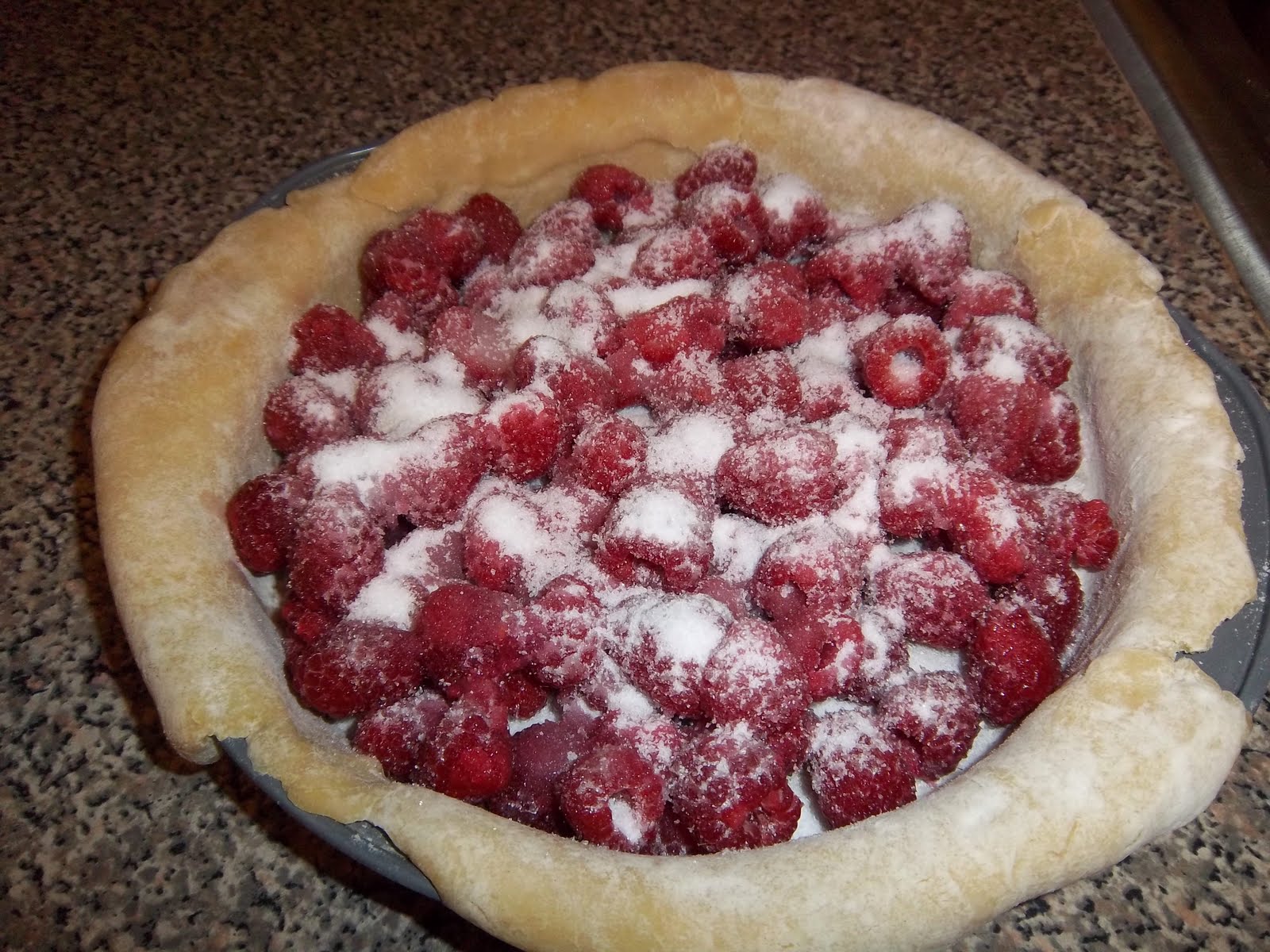
#297 Raspberry Pie


The tale of this pie is of personal pain and anguish. Let me tell you the tale…

It was my work-buddy Chandra's PhD thesis defence yesterday and she requested that I made this pie rather a cake for when she came out. Great stuff, thought I, any excuse to make something out of the book, plus the raspberry is my favourite fruit so it has got to be a winner. This pie is an eighteenth century pie and requires the fruit to be cooked in the pastry casing and then in the last five minutes, a custard to be poured in through the hole in the pastry. This was the usual way to make a fruity pie in those days, apparently. Anyway, Griggers says to serve it hot or warm, so I nipped back to my apartment to make it. I popped the pie into the oven and got the custard – or caudle as it was called then – ready.

Unfortunately the raspberries were so juicy that there was no room for any caudle, so I ran over the road and bought some straws from the shop with the inspired idea that I would suck the spare juice out. Hoping the pie had cooled slightly I attempted to suck some out – I think because time was becoming an issue I didn't notice the fact that this was 170°C fruit syrup too much, but then as I realized just how much syrup there was, my nervous system kicked in. Cue much wincing and swearing. After about 15 minutes of this, I had finally cleared enough space to pour the caudle in. Mouth pretty sore, but not major damage done. Popped the pie back in the over for its final five minutes and rushed it back to Rice University. It was only whilst driving down towards work that I noticed the skin of the roof of mouth sloughing off and dangling upon my red raw tongue. She had better bloody like this pie. Luckily it went down well. On returning home later that evening, I rinsed my mouth out with Listerine before bed. More agony. Then, in the morning, I thought I would clean my tongue as well as my teeth as it was burnt and may have had some nasty bacteria there trying to infect the poor thing. Bad idea. I left for work with bleeding tongue. Hopefully it won't go gangrenous and I won't have to have my face removed.

To make the pie, you need to start with the pastry. In the eighteenth century, puff pastry will have been used, but Griggers goes for the sweet rich shortcrust and gives an ingredients list for it. Sieve 12 ounces of plain flour along with 2 tablespoons of icing sugar and a pinch of salt into a large bowl. Next, add 8 ounces of cubed butter or a combination of butter and lard. Use a mixer or food processor, to rub the butter into the flour. If you like to keep it real, use your hands or one of those pastry cutters as I did. The important thing is to keep everything as cold as possible – use butter straight out of the fridge and turn that A/C as low as you can! Once the butter is rubbed in, add an egg yolk (keep the white) and two or three tablespoons of ice-cold water, enough to bring everything to a dough. Don't worry if you add too much, you can add some more flour. Knead the dough briefly and then pop it in the fridge to rest and firm up again.

Preheat your oven to 190°C (425°F) and place a baking sheet on one of the shelves. Now roll out two-thirds of your dough and line your pie dish with it. If it is warm in the kitchen, roll it out on some cling film, this will stop it from breaking up. A top tip for you there. The dish needs to be 2 to 3 inches deep, Griggers doesn't mention a diameter, but I went with an eight inch diameter one. Now arrange a pound of raspberries in a layer in the pie and sprinkle over 4 ounces of sugar (or less, if the raspberries are particularly sweet).


Roll out the remainder of the pastry to form a lid, gluing it on with a brushing of the reserved egg white. Trim the edges and decorate if you wish – I went with a mortar board motif, seeing as it was a PhD defence. Brush with more egg white and sprinkle with sugar. Make sure you leave a good-sized hole in the centre. Place in the oven on the hot baking tray and bake for 15 minutes before turning down the heat to 190°C (375°F). The point of the hot baking tray is so that the pastry bottom crisps up before the raspberries give up their juice, preventing a soggy pastry bottom to the pie. The pie should be cooked until the pastry is nicely browned and crisp, around 40 minutes.

Whilst it is cooking, prepare the caudle: bring 4 fluid ounces of single and 4 of double cream to a boil in a saucepan. As soon as boiling point is reached pour them over two egg yolks, whisking vigorously to prevent making scrambled eggs. In the final 5 minutes of cooking, take the pie out of the oven and slowly pour the caudle into the pie using a funnel and return to the oven so the caudle can thicken. Serve hot or warm. Oh, she makes it sound so easy. Looking back, it would have been better to pile the raspberries in the middle slightly so when it collapsed there would have been some space for the caudle. It was also suggested that instead of using a straw, I should have used a baster or a pipette or something. Retrospect is a wonderful thing.


#297 Raspberry Pie. Ah, the raspberry. There is nothing better than stumbling across some wild raspberries when walking in the woods. The pie itself was reminiscent of the French clafoutis, where fruit is cooked in custard in a pastry case, though without the lid. I love raspberries, I love custard and I love pastry, so this could not have been a disappointment. I have to say it was delicious, even though I my taste-buds were not working at their best at the time. The caudle had thickened up and mixed with the juice, and it wasn't overly sweet either. Jane says that you can use any soft fruit for this pie – gooseberries work particularly well apparently – so I shall be definitely this again whenever there is a glut of soft fruits. Though without the second-degree burns this time. 8.5/10.

Monday, June 6, 2011

#296 Tongue and Mushroom Crumble

Around fifteen minutes after deciding to cook all the recipes in English Food, I had a first proper look through the good book. It was then I realised that some of the recipes were pretty bizarre, and this one stood out; I had not eaten tongue then, but now I have done a couple of tongue-based recipes so I wasn’t squeamish. Though a tongue crumble is still a bit weird. I made this and took it round to a small gathering of friends to try. There were mixed attitudes…

There’s not much of an introduction to this recipe – Griggers says nothing about it in the book and after an internet search, I was also none the wiser. Recipes did crop up, but there was, alas, no background or history to it. Here’s a nice painting with an ox tongue in it though:

Calf's Head and Ox Tongue by Gastave Caillebotte, 1882

To make the dish, you need to start with pickled tongue weighing around 3 ½ pounds – you can use any tongue you like: ox, calf or pig (I went with ox). You can pickle them yourself (look here for a post that fills you in on this) or get them pre-brined by the butcher. The tongues should be just lightly brined, so if you are doing your own, just leave them in the brine for a day or two. If it’s from the butcher’s shop, you’d be best to soak the tongue(s) overnight in cold water as they may have been in his brine crock for quite a while.

Place the tongue(s) in a stockpot along with a chopped onion and carrot, a bouquet garni and half a pint of dry cider. Top up with water to just cover. Bring slowly to the boil, skim if you need to, and simmer very gently until cooked – this could be one hour for pig, 90 minutes to two hours for calf and three hours for ox. You can tell a tongue is ready if a skewer goes in without much resistance. Don’t worry if you cook it too long, as long as the water was barely simmering, the tongue will still be moist, this because tongue is a fatty meat, around 70% fat in fact.


Take the tongue out of the pot, but keep the stock, let the tongue cool slightly so you can peel the skin off and cut away the sinew from the blunt end. There are some quite large blood vessels and sinew running along the underside of a tongue, so turn it over and cut that away too.


Now slice the tongue, removing any more gristle as you go – there is none as you approach half way. Arrange the tongue on the bottom of a buttered ovenproof dish. Next cook down 4 ounces of sliced mushrooms in one ounce of butter and scatter them over the tongue. Whilst they are cooking, finely chop a medium onion and cook it gently in two ounces of butter – cover the pan so it doesn’t brown. Once softened, stir in a rounded dessertspoon on plain flour and let it cook for a couple of minutes. Whisk in 6 tablespoons of dry white wine. It will instantly thicken. Thin it out with some of the stock until you have a sauce the consistency of thin gravy. Cook for a few minutes, adding more stock should the sauce become too thick, season and pour it over the tongue and mushrooms.

Next, make the topping by making some fresh white breadcrumbs using a blender. Griggers says to use 1 ½ ounces of bread, but you may need more. Sprinkle this over the tongue and sauce and bake in an oven preheated to 190°C (375°F) until all is bubbling. Because everything has been cooked already, it is just a heat-through that’s required, so it can all be made in advance.

Hannah gets a good lungful of tongue.
That sounded less gross in my brain than when read out loud.

#296 Tongue and Mushroom Crumble. Like most of the weird recipes in the book, this savoury crumble was pretty good. The corned tongue was very tender indeed and well flavoured too, and the mushroom lent an earthiness that always goes well with anything beefy. Much, much better than I expected 6.5/10.


Friday, June 3, 2011

#295 Purée of Dried Peas with Green Peppercorns


A rather upmarket version of that Northern English speciality, mushy peas. There is an infamous incident of the MP (now Lord!) Peter Mandelson visiting his constituency canvassing for votes, where he walked into a fish and chip shop and asked for 'some of that guacamole'. The ponce. Unfortunately, after a little research, I found on the website of that evil news rag, The Daily Mail, that it is in fact a myth and it ever happened. Shame. But why should the truth get in the way of a good story, eh?

Peter Mandelson getting hit by what appears to be a purée of dried peas

The pea has been popular in Europe for donkeys years – settlements in France dating back to the third millennium BC have been discovered with the remains of pea pods. Dried peas, go back to Roman times; in fact, they were preferred over fresh. Also, luckily for us, the pea became a very common garden vegetable, and Gregor Mendel, the garden-loving Austrian monk, spotted patterns in the variation between pea plants he was breeding and came up with the first theory of genetics. He wasn't recognised during his lifetime. So often is the way.

Gregor Mendel, Father of Genetics and pea-fancier

This recipe isn't really to go with your fish and chips (though omit the peppercorns and it will be perfect), it is to go with duck and pork. I took this as an excuse to get a nice rib roasting joint from Harrison Hog Farms, a great farm here in Houston that really looks after its very English-looking pig breeds. So if you go to a Houston farmer's market andyou spot them, give them a try as their pork is excellent.

What makes this recipe posh is the pickled green peppercorns. They're not something that you'll find in the supermarket, but they're pretty easy to get hold of in delicatessens.

Right then, to make this purée, put a pound of dried split peas in a large saucepan along with a chopped carrot and a chopped onion plus a bouquet garni (I went for parsley, bay leaves, sage leaves, thyme and rosemary in mine). Cover well with water, bring to a boil and cover and simmer until cooked – around 45 minutes. On no account add salt, it makes the peas hard and they won't cook. This is speaking from personal experience. Fish out the bouquet garni and pass the peas through a mouli-legumes in a bowl (you can use a potato-masher if you want but a blender would make it far too smooth).


Now stir in a large knob of butter and season well with salt (at least a teaspoon) and some sugar. Lastly, mix in a tablespoon of pickled green peppercorns as well as one to two teaspoons of the juice from the can. Easy.


#295 Purée of Dried Peas with Green Peppercorns. This one of the best recipes from the Vegetables chapter of the book. Really delicious and much better than the bought mushy peas you find in cans, and – dare I say it – the chippy! The addition of the bouquet garni and the simple stock veg really lifted it, and the pickled peppercorns were great, little exploding pods of subtle spiciness that transformed a vegetable side dish into the main event. 9/10.

Monday, May 30, 2011

#294 Preserved Orange Slices (part 1)

These oranges are flavoured with a heady mix of cinnamon, mace and cloves; quite a wintery combination, I suppose. In Victorian times, the orange was the most prized Christmas gift and British children would have waited with baited breath to get their hands on them. This did not apply to Irish children though – a little earlier in history, William of Orange's extreme anti-Catholic laws were so unpopular that the Irish people made a declaration that no orange tree would ever be planted in Irish soil.
William III of Orange (aka 'King Billy' by Irish Protestants)

In Europe, the best oranges have always come from Spain, and so it is no surprise that the first orange plantation in America was also Spanish. It was, of course, in Florida and it was built in 1579. After a few years of settlement, orange trees were discovered all over the forests, causing the surprised Spanish settlers to conclude that the orange must have been native to America! It turned out to not be the case – Native Americans had been stealing oranges and spitting the pips as they ate them.

I had been planning on doing these preserved oranges for a while as they are an accompaniment to pork and duck, my two new favourite meats, thanks to recent recipes here in the blog. I’ve only just gotten round to making them because a spice required for the recipe is mace – in the form of blades. Tricky, as supermarkets don’t stock them. However, now I have a car I could pop to The Heights area of Houston and visit Penzey’s spices. What a great shop! Every spice and spice blend you could ever need. Luckily, there is a store in St Louis, so I can keep myself stocked up when I move there. My favourite bit was Granny’s Kitchen which had all the baking spices.

Anyway, enough waffle. Here’s the recipe...

Begin by slicing 10 large oranges – keep them thick, about a centimetre is good – place them in a large pan and cover them with water.
Bring to a boil, cover and simmer gently for 30 to 40 minutes until the peel has softened. Don’t stir the oranges around as they will break up. Meanwhile, in another pan, dissolve 2 ½ pounds of granulated sugar in a pint of white wine vinegar. Add 1 ½ sticks cinnamon, a heaped teaspoon of cloves and 6 blades of mace to the vinegar syrup and boil for a total of 3 or 4 minutes.
When the oranges are done, drain them, reserving the orange liquor. Return the oranges to their pan and pour over the syrup to cover – if there isn’t enough, use some of the orange liquor. Cover, bring to simmering point and cook gently for a further 25 to 30 minutes.
Take off the heat and leave for 24 hours. Next day, pot in sterilised jars. Top up with syrup over the next or two, should they need to be. Here’s the catch though folks: you now have to leave them for at least 6 weeks to mature! When the time is up, they can be served with hot or cold pork, ham or duck. The syrup also makes a good sauce for duck too. Apparently.

#294 Preserved Orange Slices. Well we shall have to have a bit of patience over these. It’s strange to think that when they are ready, I’ll be living in St Louis. I can say that the syrup is delicious though. Look here for the results.

Wednesday, May 18, 2011

#293 Mrs Beeton’s Chocolate Soufflé


I've cooked quite a few – and eaten quite a few – soufflés in my time, but this is my first sweet one. It comes from the great Mrs Beeton's Book of Household Management, or to give its full title, The Book of Household Management Comprising information for the Mistress, Housekeeper, Cook, Kitchen-Maid, Butler, Footman, Coachman, Valet, Upper and Under House-Maids, Lady's-Maid, Maid-of-all-Work, Laundry-Maid, Nurse and Nurse-Maid, Monthly Wet and Sick Nurses, etc. etc.—also Sanitary, Medical, & Legal Memoranda: with a History of the Origin, Properties, and Uses of all Things Connected with Home Life and Comfort. Those Victorians do go on, don't they? The book is actually a collection of articles that she published in The Englishwoman's Domestic Magazine between 1859 and 1861, and although she conjures up imaginations of austerity and matronliness, she actually died at the rather young age of 46 of tuberculosis, or consumption as the Victorians called it, and her great masterwork was published when she was just thirty years of age.
I've been putting off doing the sweet soufflés not because I don't like the idea of them, but because I like to make desserts in advance and soufflés require a certain amount of time and concentration before baking immediately – not something I have the inclination to attempt after cooking a main meal (and perhaps polishing off a few glasses of wine). However, I thought that it was about time I tackled one, and it turns out that it is quite straight-forward, and although the whisking of egg whites and folding them into the chocolate mixture does need to be done at the last minute, much can be prepared in advance.
Preheat your oven to 190°C (375°F) and butter a cake tin (I used a 6" one), so you can pop the soufflé straight into the oven. Separate four eggs, place the whites in a large bowl, and beat into the yolks 3 heaped teaspoons of caster sugar, a heaped teaspoon flour and 3 ounces of good quality grated dark chocolate. Now whisk the egg whites to the stiff-peak stage, remove a spoonful of egg white and mix it into the chocolate mixture to 'slacken' it. This makes it easier to fold the rest of mixture into the egg whites without losing the air. It is also worth mentioning that using a metal spoon to fold in your egg whites also helps to reduce loss of air. Pour the mix into the buttered cake tin, scatter a little more caster sugar and bake for 20 minutes. Mrs Beeton says to pin a napkin around the tin and bring it to the table straight away before it falls. Serve with pouring cream.
#293 Mrs Beeton's Chocolate Soufflé. This was a very good soufflé. It wasn't very sweet, which really showed off the bitter chocolate taste. In fact is tasted just like a whipped up mug of cocoa. The chilled cream – which Americans don't seem to use on their desserts – in combination with the hot soufflé, really set it off. The only problem was that 20 minutes was a little too long; the centre of the soufflé wasn't soft, as I like it to be, so it'll be 15 minutes in the future. That's my only gripe though. 7.5/10.

Monday, May 16, 2011

#292 Isle of Man Salt Duck


After returning from my little trip back to England and Ireland, I wanted to cook something that evoked some memories of it whilst all was still fresh in my mind. There are no Irish recipes in English Food, but there are a couple of Manx recipes (if you are from the Isle of Man, you are Manx). When Hugh and I flew the short distance from Belfast to Liverpool, we looked out the window and he told me about the bits of coastline and other features, and of course the Isle of Man was pointed out, looking surprisingly small. I've never managed to go to the Isle of Man, but it looked very pretty from the air.

This is apparently a traditional Manx cured meat dish, but I did a quick internet search and could find any references to it at all, so I can't give you any background information I'm afraid, Grigsoners. The cure is very simple to do; you simply have to pack coarse sea salt inside and outside of a duck 24-hours before you want to cook it. I assume in the days when this was done for actual preservation of meat, rather than for flavour, the duck could have been cured for several days or weeks. When you are ready to cook it, brush off the salt, rinsing off any tricky to remove bits and place in a pot with enough water to barely cover it.


Cover, bring to a simmer and let it happily gurgle away for between an hour and ninety minutes, depending on the size. I am always worried about doing the boiled meat recipes in the book, I always think they are going to come out insipid and boring, especially in this case as there was no call for any stock vegetables or seasoning with spices. I invited my friends Danny and Eric around to sample the delights – hoping it would taste okay…


If you like, you can cure your duck in brine instead – check out the recipe and instructions on brining meat here.

While the duck is simmering away gently, you can be getting on with the accompaniments: an onion sauce and colcannon (an Irish invention of potatoes and either cabbage or kale mashed together).

For the onion sauce, chop four large onions and add them to a pan with just enough water to cover them, season, cover with a lid, and allow them to simmer for fifteen minutes. Drain them over a bowl, so that the cooking liquor is saved. Add half a pint of milk and just under a pint of the liquor to the pan along with half an ounce of butter and bring to a simmer. Measure two level tablespoons of cornflour and slake it with a little more cold milk and whisk it into the hot sauce; it will thicken instantly. Simmer for a few more minutes so that the cornflour can cook out. Add the onions back to the pan and season with plenty of salt and pepper – very important here to season it very well – plus the grated rind of a lemon. Add more liquor or milk if it becomes too thick. This sauce can be (and was!) made in advance – make sure you keep it covered with a lid or some cling film to prevent a skin from forming if you do.

For the colcannon, boil equal amounts of potato and kale or cabbage together in a pan. Drain, and mash with butter and salt and pepper. If you are feeling extravagant, add a little blob of cream.
When the duck is cooked, make sure you let it rest for about twenty minutes before you carve it.


#292 Isle of Man Salt Duck. I must admit, when the duck was taken out of pan to rest, it did not look that appetizing with its podgy fat and no hint of colour. I'm used to eating roast duck. However, when I cut inside, there was the most tender duck meat within. It was salty, but not overpoweringly. It also had very subtle flavour too, as did the onion sauce, which I expected to be terribly strong. Instead, it was light and very good for a spring or summer meal. The colcannon was a great accompaniment too. This kind of good, but bland food, really requires heavy seasoning, otherwise it is in danger of becoming tasteless pap. This was not tasteless pap however: 7/10.

Monday, May 9, 2011

#291 Burnt Cream or Crème Brulée

Often considered a French dessert, Crème Brulée was thought to have come out if the kitchens of Trinity College, Cambridge via the sister of a librarian there, others think from an Undergraduate from Aberdeenshire in the 1860s. When the student graduated, so did the pudding and it became a favourite of the college. This is all nonsense because a recipe can be found in The Experienced English Housekeeper by Elizabeth Raffauld which was published in 1769 (I have a facsimile of it). Grigson gives three recipes for it – the first, from the librarian who called it a Crème Brulée, the second and third – both dating earlier – called it Burnt Cream. Jane Grigson got a bee in her bonnet about whether the dessert had French or English origins. Where did Raffauld get her recipe from? It is a question that cannot answered, it seems, as the two nations' cuisines are overlapped and interwoven so much since the Norman conquest of 1066. She did find a sixteenth century English manuscript with a recipe for burnt cream though, which was written around the time that Charles II came back to England after returning from exile in France.

I did this pudding whilst I was in England to go after the roast pork. I'd been wanting to do it for a while, as it is a pud I really enjoy, but mainly I just wanted to get the blowtorch out and melt the sugar. I'd never done it and it has always looked such a satisfying thing to do. None of the receipts ask for a blowtorch, but rather a very hot grill or 'salamander', as overhead grills were called in days of yore.

There are three recipes given by Jane, I went with the first, which was also her favourite, from a 1909 book called The Ocklye Cookery Book by Eleanor L. Jenkinson:

Place the yolks of six eggs in a bowl and bring a pint of double cream to the boil and let it boil for a full half-minute. Quickly whisk the hot cream into the eggs and return the mixture to the pan. Cook on the very low heat until the cream thickens somewhat – it should coat the back of your wooden spoon. I then sweetened it with a little sugar and added some extra flavor with some orange-flower water (lifted from Raffauld's recipe). Don't cook for too long or on too high a heat, as the eggs will scramble. If you think the eggs have scrambled, pass the whole lot through a sieve. Pour the custard into a shallow dish and let it chill in the fridge for as long as possible – overnight, if possible. If not possible (as it wasn't for me), place it in the freezer as soon as it has cooled down to set. To burn the cream, scatter it with a thin, even layer of caster sugar and pop it under a very hot grill until it turn to a lovely melted caramel. Or use a blowtorch. Put it back in the fridge to harden.

For the sake of completion, here are the other two recipes:

From Domestic Cookery by a lady (Maria Rundell), 1848

'Boil a pint of cream with a stick of cinnamon, and some lemon peel; take it off the fire, and pour it very slowly into the yolks of four eggs, stirring until half cold; sweeten, and take out the spice, etc.; pour it into the dish; when cold, strew white powdered sugar over, and brown it with a salamander.'

From The Experienced English Housekeeper by Elizabeth Raffauld, 1769

'Boil a pint of cream with sugar, and a little lemon peel shred fine, then beat the yolks of six and whites of four eggs separately; when your cream is cooled, put in your eggs, with a spoonful of orange-flower water, and one of fine flour, set it over the fire, keep stirring it till it is thick, put it into a dish; when it is cold sift a quarter of a pound of sugar all over, hold a hot salamander over it till it is very brown, and looks like a glass plate put over your cream.'

#291 Burnt Cream or Crème Brulée. 'The best of all English puddings' says Griggers. Well I'm not sure of that, but it was pretty good. The cream tasted very light due to the heady perfume of the orange-flower water and the crackling caramel was satisfying to smash and delicious to eat. It wasn't quite as thick as I expected to be. We all dug in with spoons, not bothering with bowls. I expect several of us now have herpes. Overall, a pretty good recipe – I think I will try it again with the lemon and cinnamon flavourings from the 1848 recipe. 6.5/10

Saturday, May 7, 2011

#290 Roast Pork with Crackling and Baked Apples


Man's relationship with pigs goes back several thousand years. Acorn-eating wild boar were slowly tamed in European forests to become the slightly tamer proto-pig utilized by the Spanish, French and Greece. Swineherds had the unlucky job of attempting manage the unruly pigs. Modern pigs are not quite as wild as their forbearers, but do apparently revert to their feral behaviour quite readily. So beware.

Galen, the medical pioneer of the Roman era, enjoyed a bit of pork like his fellow Romans. What is odd is that he thought it tasted of human flesh. Whether this was a hunch or whether it was knowledge from experience, I do not know. He is correct though, the cannibals of the South Sea Islands, called the various explorers and pioneers they caught and ate longpigs due to their flavour.

The pig is famed for it versatility and pretty much all the animal can be used, and it is the pig that is the focal animal in Fergus Henderson's wonderful nose-to-tail restaurant, St John in London (check out the blog here). I've never managed to get there unfortunately, but one day I shall! For any nose-to-tail fans out there, the ultimate delicacy must be Pliny's personal favourite, the vulva of a sow who had aborted her first litter, according to Maguelonne Toussaint-Samat in her amazing book A History of Food.

This dish was cooked on my recent trip to England, where Hugh somehow managed to buy a massive shoulder of pork for £1.50. Absolute bargain. He's a good bargain-hunter; in fact, he's known for it! I pounced upon the opportunity to roast it the Grigson way which includes baked apples as well as a glaze to go over the crackling. I imagine a sweet glaze would go down well with Texans going by this sign I spotted at the rodeo:


It's worth mentioning that it is best to buy the largest joint you can afford, the meat will be much more moist and tender in a large joint than a small one. This particularly applies to pork that benefits from a good blast of heat and then a slower roast on a lower hear than say, beef.

As mentioned I used shoulder here, but you can use leg or loin. If the meat has a bone in it, ask the butcher to remove it but ask to keep it. Also ask him to score the rind, every centimetre or so. You can do it yourself with a razor-blade. Make sure that the rind is nice and dry and season the joint all over. You can, leave it overnight in the brine tub, but if you do this, you won't get the crackling. Seeing that the crackling is the best bit, I wouldn't recommend it. If you have bones, pop them in a saucepan with a chopped carrot, a peeled onion studded with three cloves and a bouquet garni. Cover with water and allow it to simmer for three or four hours. Strain and reduce to ¾ of a pint. If there was no bone, use some pork or vegetable stock and simmer for just an hour.

Heat the oven to 220°C (425°F) and rub the skin of the joint with some oil and sprinkle with some salt. Cook for 35 minutes to the pound (1 ¼ hours to the kilo). Place in the oven and turn the temperature down after 20 minutes to 160°C (325°F). An hour before the end of the cooking time, prepare the apples. You need one per person, and use Cox's Orange Pippins if in season. If not, use Braeburn or Mackintosh. Score a circle close to the tops of the apples, to prevent the skins bursting and nestle them around the joint. If you don't want baked apples make an apple sauce.

Next prepare the glaze. Melt a tablespoon of redcurrant jelly in a pan and mix in a tablespoon of French mustard as well as half a tablespoon each of cream and soft brown sugar. Paint the glaze all over the crackling in the final half hour of cooking.

When ready, remove the joint from the oven and let it rest for at least 20 minutes. While you are waiting, make the gravy. Melt an ounce of butter in a pan and when it goes a nutty brown colour, stir in a tablespoon of flour. Whisk in the stock and add any meat juices from the roasting pan.


Voila!

#290 Roast Pork with Crackling and Baked Apples. I have eaten roast pork many times, but never actually cooked, but I can honestly say that this was the best roast pork I've ever had from a domestic oven. It was so tender, it took no effort to slice and the glazed crackling was half crispy, half chewy and almost toffee-like. The baked apples were a revelation. An absolutely fantastic roast dinner! 9/10.

Thursday, May 5, 2011

#289 Quail

And the LORD spake unto Moses, saying,
I have heard the murmurings of the children of Israel: speak unto them, saying, At even ye shall eat flesh, and in the morning ye shall be filled with bread; and ye shall know that I am the LORD your God.
And it came to pass, that at even the quails came up, and covered the camp: and in the morning the dew lay round about the host.
Exodus 16:11-13

As you can see, eating quail has gone back a good few years. You don’t see them very much in the UK these days; I’ve perhaps seen them twice at Farmers’ Markets. The USA, however, is chock-full of tricky-to-find ingredients to help me with this blinking blog project.

Although classified as a game bird, quails are farmed these days as they’re not very common, and it is now illegal to kill them, so if you hear one chirping away in a nearby field, let it be.


People in the Middle Ages certainly did not let them be, because they loved them. Actually they ate everything it seems. Here’s a list I found of their favourite game: quail (natch), partridge, pheasant, hare, rabbit....ok thus far, all Grigson recipes, but then... rook, crow, raven, lark, sparrow, capercaillie, peacock, stork, heron, swan, crane and bittern. Phew! A certain Alfred Gottschalk says on the matter: ‘It is wonderful that the stomach of man can profit by all manner of birds, and yet there are some of them that even starving dogs would not eat.’ Quite.

Griggers doesn’t give that much detail on how to cook them, in fact this is the whole recipe: ‘...they can be browned in butter and braised with a little stock, port wine and orange peel.’

So that is exactly what I did. They were browned in a cast-iron casserole and covered in a quarter of a pint of chicken stock and a good slug of port, along with some salt and pepper and some pared orange peel and popped them in a 160°C (325°F) for 20 minutes. I then took them out to rest and used a beurre manie (i.e equal weights and butter and flour mashed together) to thicken it. I served it not with the usual game accoutrements (bread sauce, game chips etc), but mashed potatoes and some wilted spinach.


#289 Quail. One of the mildest of the game birds, pale-fleshed and light to eat. It’s difficult to keep these tiny moist so quick cooking is required. The port wine and orange gravy was delicious and didn’t overpower the birds. These smaller game are good, but I think I prefer the stronger birds like pheasant and pigeon. I did enjoy feeling all medieval having an entire animal sat on my plate, so just for that it was worth cooking them. 6.5/10.